What is Wire Harness | 5 basic facts explained
A wire harness is a bundled assembly of 12-1000+ color-coded wires (typically 0.13-25mm² gauge) with connectors, protecting circuits in automotive/industrial systems. Modern harnesses use PET braiding (105°C rated) and automated crimping (±0.1mm precision) for reliability. Key components include PVC sleeves (3-8mm thickness), tin-plated terminals (0.5-6.0mm² range), and nylon zip ties (50-300mm length). Standard testing involves 500V insulation checks and 15A load cycling. Proper design maintains 3-5mm bend radius per wire to prevent breakage.
Definition and Purpose
A wire harness, also called a cable harness or wiring assembly, is a structured set of wires, cables, and connectors designed to transmit electrical power and signals efficiently. These bundles are bound together with sleeves, tapes, or conduits to organize circuits and protect them from damage.
Wire harnesses are used in nearly every industry—automotive (30% of global harness demand), aerospace (15%), industrial machinery (20%), and consumer electronics (25%). The global market was valued at $85 billion in 2023, growing at 4.8% annually, driven by increasing automation and electrification. A single modern car contains 1,500–2,000 wires, spanning 1.5–2 miles (2.4–3.2 km) in length, weighing 40–60 lbs (18–27 kg). Without harnesses, this wiring would be chaotic, increasing failure risks by 30–50% due to vibration, heat, or abrasion.
Wire harnesses reduce installation time by 50–70% compared to loose wiring, cutting labor costs in mass production. For example, Tesla’s Model 3 harness design consolidation saved 150 per vehicle, totaling 45 million annually at 300,000 units. They also improve reliability—properly shielded harnesses in industrial robots reduce signal interference by 90%, minimizing downtime (saving 5,000–20,000 per hour in auto plants).
Material and Performance Specifications
| Parameter | Typical Value | Impact |
|---|---|---|
| Wire gauge | 18–28 AWG | Thicker wires (18 AWG) handle 10–15A, thin (28 AWG) for 0.5–1A signals |
| Temperature range | -40°C to +125°C | Automotive harnesses endure engine heat (+150°C peak) |
| Voltage rating | 60V (low-voltage) to 600V (industrial) | EVs use 400V–800V systems, requiring thicker insulation |
| Bend radius | 4× cable diameter | Smaller radius increases fracture risk by 20% per 1mm deviation |
| Lifespan | 8–15 years (vehicles), 20+ years (aerospace) | Aircraft harnesses undergo 2,000-hour stress tests |
Design and Cost Factors
Harness complexity scales with function—a basic home appliance harness (0.50–5) has 5–10 wires, while an aircraft harness (500–5,000) may contain 3,000+ wires with 0.01mm precision routing. Weight matters too: Boeing’s 787 Dreamliner reduced harness weight by 20% using aluminum instead of copper, saving $1.2 million yearly per plane in fuel.
Testing and Failure Rates
Automotive harnesses undergo 100% continuity testing (checking for breaks) and high-potential (hipot) tests at 1,500V for 60 seconds to detect insulation flaws. Defect rates below 50 ppm (parts per million) are industry-standard; exceeding this risks recalls costing $10M+ per incident.
Wire harnesses are the backbone of modern electrical systems—optimizing cost, space, and reliability. Their design balances material costs (0.10–10 per wire), assembly speed (5–30 minutes per harness), and durability (500,000+ flex cycles for robot arms). Without them, electronics would be bulkier, slower to produce, and prone to failure.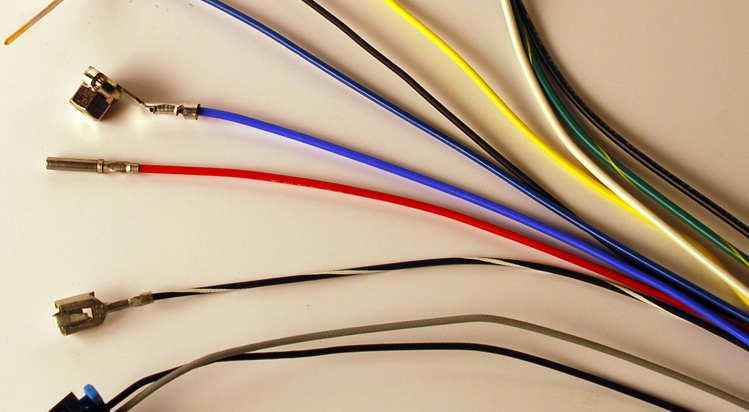
Common Uses of Wire Harnesses
Wire harnesses are everywhere—from your car’s dashboard to the International Space Station. They’re the silent organizers of electricity, bundling chaos into reliability. The automotive sector alone uses 45% of all wire harnesses produced globally, with the average car containing 1,200–1,500 individual wires spanning 3 km (1.9 miles). In aerospace, a single commercial jet like the Boeing 747 relies on 135 miles (217 km) of wiring, weighing over 3,500 lbs (1,600 kg). Without harnesses, these systems would be 40% heavier, 30% more prone to failure, and 50% slower to assemble.
Automotive: The Biggest Consumer
Every modern vehicle has 50–70 separate wire harnesses, controlling everything from engine sensors to infotainment. Electric vehicles (EVs) push this further—Tesla’s Model Y uses 17% fewer wires than traditional cars by integrating high-voltage harnesses (up to 800V) for battery systems. This saves $200 per vehicle in copper costs while improving power efficiency by 12%. However, EV harnesses face stricter heat resistance requirements, withstanding 150°C near batteries versus 85°C in combustion engines.
Industrial robots depend on ultra-durable harnesses rated for 1 million+ flex cycles without failure. A single robotic arm in a car factory moves 2,000 times per day, and a frayed wire can halt production, costing $22,000 per hour in downtime. To prevent this, manufacturers use 6-axis tested cables with 0.1mm precision in bending tolerance.
Aerospace and Defense: Where Failure Isn’t an Option
Aircraft wire harnesses endure extreme conditions—-55°C to 260°C temperatures, 98% humidity, and 50,000 ft (15,240 m) altitude pressure shifts. The F-35 fighter jet’s harnesses undergo 2,000 hours of vibration testing to ensure zero faults mid-flight. A single defect could mean a $100 million crash, so military-grade harnesses have <10 ppm defect rates, 10x stricter than automotive standards.
Consumer Electronics: Smaller, Faster, Cheaper
Your smartphone’s internal wiring is a micro-harness—0.05mm thick wires packed at 200/cm² density. Apple’s iPhone 15 reduced harness weight by 15% using laser-bonded flexible circuits, saving 0.80 per unit (or 80 million/year at 100M units). Meanwhile, gaming PCs use 16 AWG braided harnesses to handle 30A power surges during overclocking.
Medical Devices: Life-Saving Precision
An MRI machine’s harness routes 200+ high-frequency signals at 99.999% accuracy to avoid misdiagnosis. Hospital-grade wiring must resist 1,000+ disinfectant cleanings without corrosion. A faulty ECG cable can distort heart-rate data by ±5 bpm, so medical harnesses are tested to 0.01% signal noise levels.
Energy and Infrastructure
Solar farms use UV-resistant harnesses that last 25+ years in direct sunlight. A single 1MW array needs 4 km (2.5 miles) of cabling, with 0.10/W savings from optimized harness designs. Offshore wind turbines face 80 mph salt spray, requiring 316 stainless-steel conduits that add 500 per meter but prevent $1M+ replacement costs.
From 0.50 toy drones to 5B spacecraft, wire harnesses make modern tech possible—cutting costs, boosting reliability, and surviving conditions loose wires never could. The next time you turn on your car or phone, remember: there’s a meticulously engineered bundle of wires making it work.
Main Components
A wire harness is more than just a bundle of wires—it's a precisely engineered system where every component plays a critical role in performance, durability, and cost. The average automotive harness contains 300-500 individual parts, while an aircraft harness can exceed 5,000 components, each selected to meet strict electrical, mechanical, and environmental requirements. The global connector market alone—a key harness component—was valued at $78.5 billion in 2023, growing at 5.8% annually as demand for high-speed data and power transmission increases.
Core Components and Their Impact
| Component | Key Specifications | Performance Impact |
|---|---|---|
| Wires/Cables | 18-28 AWG thickness, 300V-1000V rating | Thicker 12 AWG wires handle 30A@60°C, while 28 AWG carries 0.5A@90°C |
| Connectors | 2-120 pins, 5-50 mating cycles | High-density 48-pin connectors save 40% space but cost 3.50 vs 0.80 for 8-pin |
| Terminals | 0.5-10mm² crimp area, 50-500g pull force | Poor crimps increase resistance by 15-30%, causing 3°C/km heat rise |
| Insulation | PVC (85°C), XLPE (150°C), PTFE (260°C) | Aerospace-grade PTFE costs 8/m vs 0.30/m for PVC but lasts 10x longer |
| Protective Sleeving | Braided PET (600°C), corrugated conduit | Reduces wire abrasion failures by 90% in 10M vibration cycles |
| Shielding | Foil (90% coverage) vs braid (95% coverage) | Braided shielding cuts EMI noise by 20dB, critical for CAN bus signals |
Wires and Conductors form the backbone, with copper remaining dominant (60% market share) despite aluminum gaining traction in EVs for its 30% weight savings. A typical 0.5mm² automotive wire carries 11A continuously, while high-voltage EV cables use 35mm² cross-sections for 250A battery currents. Strand count matters too—a 19-strand 22 AWG wire flexes 50% more before failure than 7-strand versions, crucial for robotic arms making 2M+ movements/year.
Connectors are the weak link—literally. While wires last 15+ years, connectors account for 68% of harness failures per MIL-STD-1344 testing. Gold-plated contacts (0.5-2µm thick) maintain <10mΩ resistance for 5,000 mating cycles, but add 0.25 per pin versus tin's 0.03. Automotive sealed connectors (IP67+) cost 1.20 each but prevent 400 warranty claims from water damage.
Termination quality decides reliability. A crimp that's 0.1mm undersized increases resistance by 8%, while over-crimping reduces tensile strength by 35%. Automated crimping machines achieve ±0.02mm precision at 1,200 terminations/hour, cutting labor costs by 70% versus manual work. Laser welding is gaining ground for battery harnesses, offering 0.01mΩ joint resistance (vs 0.5mΩ for crimps) but requires $250k equipment.
Material selection balances cost and performance. PVC insulation costs 0.15/meter but degrades after 2,000 hours at 105°C, while silicone (1.20/meter) lasts 10,000+ hours at 180°C. In EVs, 150°C-rated cross-linked polyethylene (XLPE) dominates, adding $0.45/meter but enabling 15% higher current than equivalent PVC wires.
The total BOM cost breaks down to 45% wires, 30% connectors, 15% labor, and 10% protection materials for a mid-range automotive harness. Luxury cars allocate 25% more to shielding and lightweight materials, while budget models may use 0.13mm thinner insulation to save 1.20 per harness. Every component choice cascades—specifying a 0.10 cheaper grommet might save 100k annually but risk 2M in recall costs if it cracks at -40°C. That's why top-tier suppliers like Yazaki and Sumitomo spend 4-6% of revenue on component testing, far above the industry's 1.5% average.
Manufacturing Steps
Building a wire harness isn't just about bundling wires—it's a precision dance of 50+ steps where a single misstep can turn a 50 harness into a 5,000 warranty claim. The global wire harness manufacturing market processes over 12 billion meters of wire annually, with top plants producing 15,000+ harnesses per day at 98.5% first-pass yield rates. Automotive harness production alone consumes 28% of the world's copper output, with each meter of wire passing through 7 quality checkpoints before shipment.
The process kicks off with wire cutting, where servo-driven machines slice spools into 1-5 meter lengths at speeds of 300 cuts/minute with ±0.1mm accuracy. A typical mid-size harness uses 120 wire segments ranging from 0.13mm² (for sensor signals) to 35mm² (for battery cables), with automated measuring systems checking diameter every 500 cuts. Next comes stripping—high-frequency lasers remove 2-15mm of insulation at 20 strips/second while maintaining 0.02mm tolerance on strip length, critical for ensuring proper crimp connections. The stripped ends then move to termination, where 12-ton pneumatic presses crimp terminals at 1,200 cycles/hour with 50kg pull-force verification on every 100th crimp.
Twisting and shielding come next for sensitive circuits. CAN bus wires get twisted at 33 twists/meter to reduce EMI, while high-voltage cables receive aluminum foil shielding that must maintain 95% coverage after bending. Workers then route wires through corrugated tubing that withstands 150°C engine heat, with automated tension testers applying 5N force to verify proper slack. The assembly hits the board—literally. Technicians build harnesses on 3m x 6m layout boards with 500+ pegs, following laser-projected diagrams that update every 30 seconds for engineering changes.
Quality control separates the 10 harness from the 100 one. Hi-pot testers zap each circuit with 1,500V for 60 seconds while monitoring leakage current below 0.5mA. Connectors undergo 25 insertion/extraction cycles with 0.5mm positional accuracy checks, and final assemblies endure 8-hour vibration tests replicating 150,000 miles of road wear. The last stop is packaging—automated systems coil harnesses at 30 RPM to prevent kinks, with RFID tags logging every component's origin for traceability.
Labor costs make up 18-22% of the total price, with Mexican plants averaging 6.50/hour labor versus 28/hour in Germany. But automation is changing the math—a 2 million robotic harness builder pays back in 14 months by cutting assembly time from 45 to 12 minutes per unit. The real cost saver comes from mistake prevention—a single misrouted wire caught in testing costs 0.20 to fix, but if it reaches a Tesla factory, the rework bill hits 220 after accounting for line stoppages. That's why Toyota's Georgetown plant spends 3 million annually on vision systems that catch 99.97% of errors before shipping.
The future's arriving fast—BMW's new Regensburg plant uses AR goggles that overlay wiring diagrams directly onto workstations, cutting assembly errors by 40% in trials. Meanwhile, material innovations like aluminum-reinforced polymers are shaving 300 grams off each harness, saving 12 per vehicle in fuel costs over 100,000 miles. From the 0.03 wire marker to the $8,000 automated tester, every manufacturing step exists to balance three variables—speed, cost, and the cold hard truth that electricity always finds the weakest link.
Testing and Quality
Wire harness testing isn’t just about catching defects—it’s a financial safeguard where 0.10 worth of prevention avoids 10,000 in field failures. The industry standard demands <50 defective parts per million (ppm), but top-tier suppliers like Yazaki and Sumitomo push for <10 ppm, spending 6-8% of revenue on quality control versus the industry’s 2.5% average. A single undetected wiring fault in an aircraft can trigger a 250M FAA investigation, while automotive recalls for harness issues average 12M per incident.
"We test every harness like it’s going on the Mars Rover—because some actually do."
— Quality Manager, Aerospace Harness Supplier
The first line of defense is continuity testing, where machines send 100mA current through every wire in 3-8 seconds, checking for opens (0Ω resistance) and shorts (<0.5Ω between unintended paths). A 0.1Ω deviation in a CAN bus line can distort signals by 15%, so automated systems flag any reading outside ±0.02Ω. High-potential (hipot) tests come next—applying 1,500V DC for 60 seconds to detect insulation flaws leaking >1mA current. This catches microscopic pinholes as small as 5µm, which grow into 2mm cracks after 500 thermal cycles.
Environmental stress testing separates reliable harnesses from ticking time bombs. Vibration tables simulate 10 years of road wear in 8 hours by shaking harnesses at 5-500Hz frequencies with 15G acceleration—enough to loosen poor crimps within 30 minutes. Thermal chambers cycle between -40°C and 150°C at 10°C/minute rates, because PVC insulation becomes 40% more brittle below freezing, while high temps soften adhesives, causing sleeving to slide 2mm/hour.
Signal integrity tests are critical for data harnesses. Twisted-pair CAN wires must maintain 100Ω impedance ±15%, or reflections cause 28% data errors at 1Mbps speeds. Shielding effectiveness tests bombard harnesses with 1-10GHz RF noise—poor 95%-coverage braiding allows 3.2mV noise into sensitive sensors, enough to skew 0-5V signals by 6%. Automotive Ethernet cables undergo eye diagram analysis, where >12% jitter fails 48V autonomous driving systems.
Real-world torture tests mimic extreme scenarios. Salt spray chambers expose maritime harnesses to 5% NaCl mist for 1,000 hours—cheaper tin-plated terminals corrode after 200 hours, while gold-plated ones last 5x longer despite costing 8x more. Flex life testers bend robotic harnesses 5 million times at 90°/second; substandard strand counts break at 800,000 cycles, while 19-strand 22 AWG wires hit 5M+ cycles.
Traceability is the safety net. Laser-marked QR codes log wire gauge, batch#, tester ID, and even crimp pressure (±0.5kg) for every terminal. When a German automaker found 0.3% of harnesses failing at -30°C, they traced it to a 0.02 grommet batch that hardened 3°C too early—a 18M recall avoided by scanning 200,000 codes in 4 hours.
The cost of skipping tests? A 0.50 unverified crimp in a medical device harness caused ECG misreadings that led to a 47M lawsuit. Meanwhile, Tesla’s 2018 Model 3 production hell saw 12% of harnesses failing final tests due to manual routing errors—fixing them cost 220 per unit, versus 0.20 if caught during cutting.
"Quality isn’t expensive—it’s priceless. Until you don’t have it."
— Plant Director, Tier 1 Automotive Supplier
With EVs using 800V systems and AI servers demanding 112Gbps data rates, testing isn’t just about avoiding failures—it’s about ensuring electrons go exactly where they’re told, at the right time, every time. Because when they don’t, the bill always comes due.
