What Materials Are Used in a High-Temp Engine Wiring Harness
High-temp engine wiring harnesses use silver-plated copper conductors (0.01-0.03mm Ag layer for oxidation resistance), PTFE insulation (260°C long-term rating to prevent melting), and 316 stainless steel connectors (800°C tolerance) to endure engine bay temperatures up to 200°C continuous.
Insulation: Silicone vs. PTFE
In a high-temperature engine bay, where ambient temperatures can consistently sit at 125°C (257°F) and spike to 150°C (302°F) near exhaust components, standard PVC insulation (rated for 105°C max) would quickly fail. The two dominant materials for this harsh environment are silicone and PTFE (Polytetrafluoroethylene).
-
Silicone Rubber: The flexible, cost-effective workhorse.
-
PTFE (Teflon): The thin, tough, high-performance specialist.
A typical silicone rubber insulation has a continuous operating temperature rating of 180°C to 200°C (356°F to 392°F). Its primary advantage is a very low bend radius; it remains pliable even at -50°C (-58°F), making harness installation and routing significantly easier. The material is also inherently resistant to moisture, ozone, and ultraviolet light. However, this flexibility comes with mechanical trade-offs. Silicone has poor abrasion resistance; a force of just 20-50 Newtons can easily damage it. It is susceptible to cuts and wear from chafing against brackets or sharp edges. To combat this, silicone-insulated wires often have a thicker wall, sometimes 0.5mm to 0.8mm per side, adding bulk and weight to the overall harness. From a cost perspective, it is the more economical option, often 30-50% less expensive than PTFE-insulated equivalents.
Its continuous operating temperature rating is 260°C (500°F), making it the only choice for applications near turbochargers or exhaust headers. Its most significant mechanical property is an extremely low coefficient of friction, giving it a naturally slippery surface that resists abrasion and prevents sticking. A PTFE wall can be engineered incredibly thin, down to 0.2mm, allowing for a smaller overall wire diameter and lighter weight—crucial in tight engine compartments. It also boasts superb dielectric strength, often exceeding 600 volts per mil, in a much thinner wall than silicone.
Conductor Core: Copper Alloys
At sustained temperatures above 150°C (302°F), copper begins to anneal, or soften, losing up to 60% of its tensile strength. This makes it susceptible to breaking under vibration, a guaranteed failure in an engine bay. To combat this, specific copper alloys are used to enhance mechanical strength and thermal endurance without sacrificing too much electrical performance.
-
Pure Copper (Electrolytic Tough Pitch - ETP): The conductivity benchmark.
-
Copper-Clad Aluminum (CCA): A lightweight, cost-driven alternative.
-
Copper Alloys (Cadmium, Tin, Silver): The high-strength, high-temperature solutions.
Pure copper (ETP) boasts 100% IACS (International Annealed Copper Standard) conductivity, making it the benchmark for minimal electrical resistance. However, its operational ceiling is roughly 150°C before significant softening occurs.
Copper-Clad Aluminum (CCA) features an aluminum core with a thin outer layer of copper, typically a 10% cross-section by weight. It offers weight savings of up to 50% and a material cost reduction of 20-40% compared to pure copper. However, this comes with significant trade-offs: its conductivity is only 63% IACS, meaning a 20 AWG CCA wire must be upsized to 18 AWG to handle the same current as a copper wire, negating some weight and cost benefits. It also has higher resistance to fatigue failure, with a typical 0.5% elongation rate compared to copper's 15-40%.
For high-temp engine applications, high-strength copper alloys are essential. These materials sacrifice a small amount of conductivity for dramatically improved mechanical properties at temperature.
-
Cadmium Copper (CdCu): An alloy with 0.5% to 1.2% cadmium offers 85-90% IACS conductivity while increasing tensile strength by 50% and retaining strength at temperatures up to 200°C (392°F). Its fatigue resistance is approximately 100% better than that of pure copper.
-
Copper-Tin (Tin-Bronze): A more common and environmentally friendly alternative to cadmium, an alloy with 1-3% tin retains 80-85% IACS conductivity and provides excellent resistance to relaxation and creep under thermal stress.
-
Copper-Silver (CuAg): A small silver addition of 0.03% to 0.1% raises the recrystallization temperature, allowing the wire to maintain its hardness and tensile strength at continuous operating temperatures of 200°C and peaks up to 250°C (482°F), with a conductivity retention of 96% IACS.
Protective Outer Jacket
A standard 3 mm thick jacket can be worn through in under 6 months if it chafes against a sharp bracket. In engine compartments, temperatures range from -40°C to 150°C, and jackets face exposure to motor oil, transmission fluid, brake fluid, and glycol-based coolants.
|
Material |
Abrasion Resistance (Tape Rating) |
Continuous Temp Range |
Fluid Resistance |
Relative Cost |
|---|---|---|---|---|
|
Silicone Rubber |
Poor (≤ 50 cycles) |
-55°C to 180°C |
Good |
1.5x |
|
Cross-Linked PVC (XLPVC) |
Good (100-150 cycles) |
-40°C to 125°C |
Excellent |
1.0x (Baseline) |
|
Thermoplastic Elastomer (TPE) |
Very Good (150-200 cycles) |
-50°C to 135°C |
Moderate |
1.2x |
|
Polytetrafluoroethylene (PTFE) |
Excellent (≥ 300 cycles) |
-70°C to 260°C |
Exceptional |
4.0x |
Silicone rubber jackets provide the best extreme high-temperature flexibility, operating continuously up to 180°C. Their primary advantage is maintaining elasticity across a 235°C temperature span, preventing cracking in cold start conditions. However, their abrasion resistance is the poorest among common materials, failing after approximately 50 cycles in a standardized scrape test. They are susceptible to swelling when exposed to high-pressure fuel sprays, with a volume increase of up to 10%. Their use is typically reserved for the highest temperature zones where physical abuse is minimal, adding roughly 50% to the cost over a standard XLPVC jacket.
It offers excellent resistance to a wide range of automotive fluids, showing less than 5% volume change after 48 hours of immersion in engine oil at 125°C. Its abrasion resistance is significantly better than silicone, surviving 100 to 150 cycles in testing. Its main limitation is temperature; at sustained temperatures above 125°C, it begins to harden and can crack.
They offer superior abrasion performance, withstanding 150-200 cycles, and a wider low-temperature flexibility down to -50°C compared to XLPVC. Their primary weakness is a higher fluid absorption rate; they can swell by 15-20% when exposed to hydrocarbon fuels, compromising their mechanical integrity. They are priced about 20% higher than XLPVC and are often selected for applications requiring better durability than PVC without the high cost of specialty materials.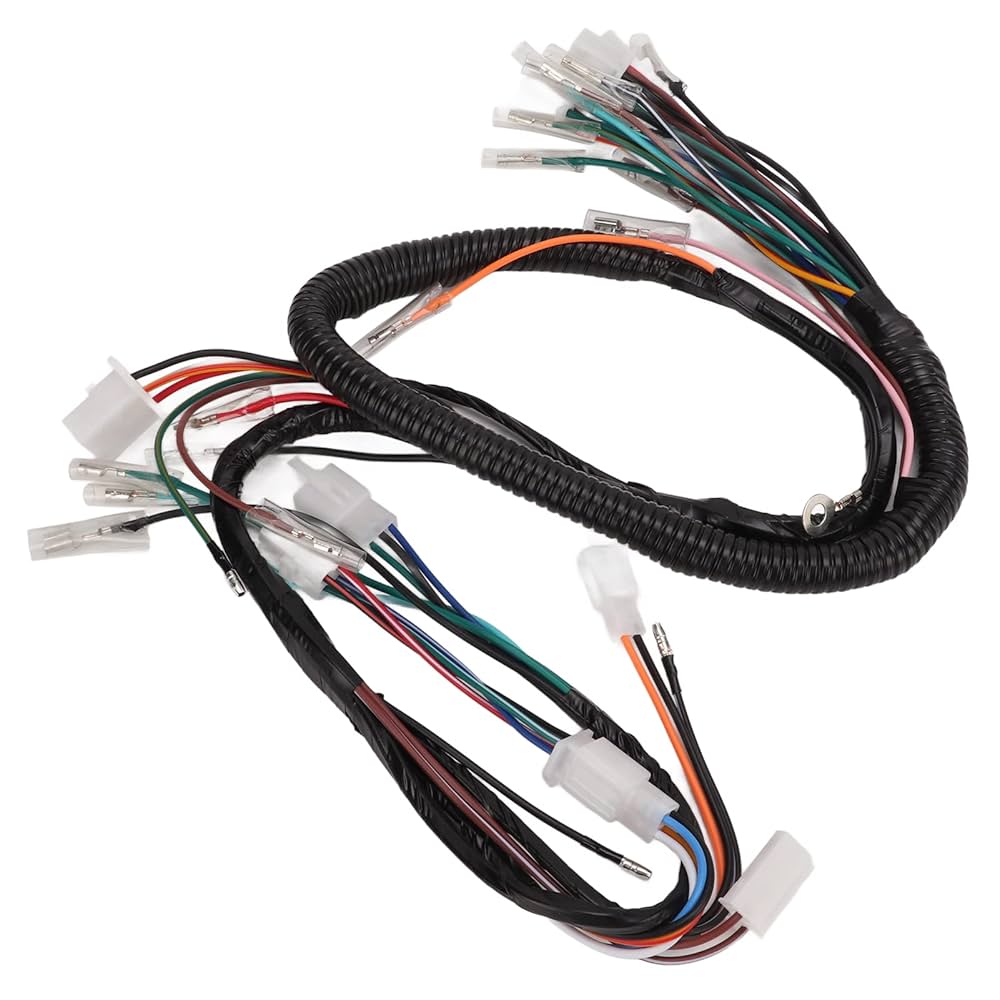
High-Temp Connector Types
Standard nylon connectors, rated for 125°C, will deform and lose their mechanical integrity when exposed to sustained under-hood temperatures of 150°C+, leading to terminal backlash, increased electrical resistance, and ultimately, connection failure. The choice of connector material and design is paramount for maintaining signal integrity and power delivery over a vehicle's 10-15 year service life.
|
Material |
Continuous Temp. Range |
Comparative Cost |
Key Strength |
Primary Weakness |
|---|---|---|---|---|
|
High-Temp Nylon (PPA) |
-40°C to 190°C |
1.5x |
Strong mechanicals at high temp |
Hydrolysis degradation |
|
Polybutylene Terephthalate (PBT) |
-40°C to 170°C |
1.3x |
Excellent fluid resistance |
Lower impact strength |
|
Polyphenylene Sulfide (PPS) |
-40°C to 220°C |
2.0x |
Dimensional stability, high temp |
Brittle, lower ductility |
|
Liquid Crystal Polymer (LCP) |
-40°C to 240°C |
3.0x |
Highest thermal resistance |
Anisotropic, high cost |
High-Temperature Nylon (Polyphthalamide/PPA) is the most common upgrade from standard nylon, offering a significant thermal boost. Its continuous operating temperature peaks at 190°C, making it suitable for the majority of under-hood locations away from exhaust manifolds. It retains approximately 85% of its tensile strength at 170°C compared to its strength at room temperature. However, it is susceptible to hydrolysis—degradation from absorbed moisture—which can reduce its structural integrity over 5-7 years in high-humidity environments. It strikes a balance between performance and cost, typically priced 50% higher than standard nylon connectors.
Polybutylene Terephthalate (PBT) is chosen for its exceptional resistance to a broad spectrum of automotive fluids, including engine oil, transmission fluid, and coolants. It shows less than 0.5% volume change after 1000 hours of immersion in 150°C engine oil. Its thermal capability is solid, with a maximum continuous rating of 170°C. The main trade-off is its relatively lower notched impact strength, approximately 5 kJ/m², which means it can be more susceptible to cracking if mishandled during installation or from impact by road debris. It is a cost-effective high-temp option, around 30% more expensive than standard nylon.
Polyphenylene Sulfide (PPS) is the go-to material for severe thermal applications near turbochargers or on the engine block. It operates reliably at temperatures up to 220°C and has a UL94 V-0 flammability rating, meaning it will stop burning within 10 seconds after a flame is removed. Its most critical property is its ultra-low mold shrinkage rate of 0.2-0.5%, which provides exceptional dimensional stability to maintain precise terminal alignment and sealing force, even after 3000 hours of thermal cycling. Its downside is inherent brittleness; its strain at break is only 1.5%, requiring careful design to avoid stress concentrations. This performance comes at a 100% cost premium over standard materials.
Liquid Crystal Polymer (LCP) represents the peak of high-temperature connector polymers, rated for continuous use up to 240°C. It is often used for direct-on-engine sensors and components within 30 cm of a turbocharger housing. Its thermal deflection temperature is extraordinarily high at 280°C. Its flow properties allow for the molding of incredibly thin walls as small as 0.2 mm, enabling highly miniaturized connector designs. However, its mechanical properties are highly anisotropic, meaning strength varies significantly depending on the direction of the polymer flow during molding. This, combined with a cost that is 200% higher than standard nylon, reserves it for the most extreme and space-constrained applications. All these thermoplastic connectors rely on high-performance silicone seals to prevent moisture ingress, which must be capable of withstanding a 100 kPa pressure differential and operating between -55°C and 200°C.
Shielding for Signal Wires
An unshielded wire can act as an antenna, picking up radio frequency interference (RFI) in the 10 MHz to 1 GHz range. This induced noise can corrupt a 5V analog signal with spikes exceeding ±500 mV, leading to erroneous ECU readings and potential engine misfires. Effective shielding is not optional for these circuits; it is a requirement for functional integrity, creating a Faraday cage that attenuates noise by at least 40 dB across a 100 MHz bandwidth.
The primary function of a shield is to provide a low-impedance path to ground for unwanted noise currents, preventing them from coupling onto the inner conductor.
The most common and robust shielding type is braided shielding, typically constructed from tinned copper strands with a 90% to 95% coverage rate. This high coverage provides excellent effectiveness across a broad frequency range, offering 50-60 dB of attenuation at 100 MHz. The trade-off is reduced flexibility and higher weight; a braided shield can add 15-20% to the overall diameter and 30% to the weight of the wire. Its flexibility is also reduced, with a minimum dynamic bend radius of approximately 10 times the cable diameter. This makes it ideal for areas with moderate movement but high noise, such as routing near alternators, which can generate noise fields of 5-10 V/m.
For applications requiring maximum flexibility, spiral (servo) shields are used. Made by wrapping a single copper strand in a helical pattern, they allow for a much tighter dynamic bend radius of 5 times the cable diameter, making them perfect for connections to moving components like sensors on engine mounts. However, this design comes with a lower coverage rate, typically 70-80%, which reduces its high-frequency shielding effectiveness to around 35-45 dB at 100 MHz. They are more susceptible to damage when pulled over sharp edges and have a higher DC resistance, which can slightly affect the noise drainage efficiency.
Heat-Resistant Labeling Methods
Labels face direct exposure to temperatures exceeding 150°C (302°F), oil spray, fuel, and cleaning solvents. A poor-quality label can fade, peel, or become unreadable in under 6 months, turning critical maintenance and repair into a guessing game. Effective identification must withstand the same harsh conditions as the wiring itself, maintaining legibility for the vehicle's entire 15-year service life.
-
Heat-Shrink Polyolefin Sleeves: The durable, all-in-one solution.
-
Polyimide Labels: The flexible, high-temp film standard.
-
Laser Marking: Permanent, direct-part identification.
|
Method |
Material |
Max Continuous Temp |
Adhesion/ Bond Strength |
Resistance Properties |
Relative Cost |
|---|---|---|---|---|---|
|
Heat-Shrink Sleeves |
Polyolefin |
135°C (275°F) |
Mechanical (shrink fit) |
Excellent abrasion, chemical |
2.5x |
|
Polyimide Labels |
Polyimide Film |
200°C (392°F) |
≥ 30 N/cm (acrylic adhesive) |
Good chemical, moderate abrasion |
1.5x |
|
Laser Marking |
N/A (alters jacket) |
N/A (matches jacket) |
Permanent subsurface change |
Exceptional resistance |
3.0x (initial setup) |
These sleeves are slid onto the wire before terminal crimping and then shrunk with a 1,000°C hot air gun, reducing their diameter by 50% to form a tight, mechanical bond. The printed text is typically protected under a 0.1mm thick transparent outer layer, making it highly resistant to abrasion and direct contact with fluids like gear oil and brake fluid. Their primary limitation is thermal; while they excel up to 135°C, prolonged exposure near 150°C can cause over-shrinking or embrittlement. They add significant bulk and are one of the more expensive options per label, but their durability often justifies the 150% cost premium over basic labels for critical connections.
0.05mm thick films are coated with a high-performance silicone or acrylic adhesive that requires a peel strength of at least 30 Newtons per centimeter to remove after proper application. They can withstand continuous temperatures up to 200°C and short-term excursions to 260°C, making them suitable for labeling wires on the engine block or turbocharger harness. The printing is done using thermal transfer printing with a specialized resin-based ribbon that fuses with the film surface. While resistant to most chemicals, the adhesive bond can be compromised by prolonged exposure to strong solvents like brake cleaner, and the thin film offers minimal protection against physical scraping. Their cost is moderate, typically 50% higher than a standard vinyl label.
A CO2 or fiber laser removes a microscopic layer of the jacket material (typically 20-50 microns deep) to create a high-contrast, indelible mark. This process has no adhesive, so the marking possesses the exact same chemical and temperature resistance as the underlying jacket material, whether it's cross-linked PVC, TPE, or silicone. It is completely immune to peeling, solvents, and abrasion short of physically damaging the jacket. The primary drawbacks are high initial equipment cost, requiring a 50,000 laser system, and the need for extremely precise positioning to avoid damaging the wire's insulation. The per-mark cost is low after the initial investment, but it is a permanent, unchangeable process best suited for high-volume production where error rates must be below 0.1%.
A breakdown of high-temp engine wiring harness materials highlights critical components: insulation often uses silicone (rated -50°C to 200°C) or PTFE (260°C+ for extreme heat); conductors rely on tin/silver-plated copper alloys (98% IACS conductivity) to resist oxidation; outer jackets employ glass-reinforced polyamide (150°C+ durability); connectors integrate high-temp nylon/ceramics (200°C continuous use); signal wires feature ≥85% tin-copper shielding for EMI reduction; labels use heat-resistant polyolefins (200°C) with thermal-transfer printing for longevity.
