What Materials Are Used in Wire Harness Manufacturing
Wire harnesses primarily use tin-plated copper wires (0.13-25mm² cross-sections) for conductivity, PVC insulation (70-105°C rating) for protection, and nylon conduits (with 40% flexibility). PA66 connectors withstand 100+ mating cycles, while heat-shrink tubing (2:1 shrink ratio) provides strain relief. Shielding braids (85% coverage) reduce EMI by 30dB. Adhesive-lined terminals ensure 50N pull-out resistance. Flame-retardant sleeves (UL94 V-0 rated) prevent fire spread.
Common Wire Types
Wire harnesses rely on specific wire types to meet electrical, mechanical, and environmental demands. Copper remains the dominant conductor, used in 85-90% of harnesses due to its 58 MS/m conductivity and cost-effectiveness (~$6.50/kg). Aluminum, though lighter (2.7 g/cm³ vs. copper’s 8.96 g/cm³), is limited to 5-8% of applications (e.g., aerospace) due to higher resistance (37 MS/m) and connector compatibility issues.
Stranded wire (e.g., 16 AWG with 26 strands) dominates 70% of flexible applications, offering 10x more bend cycles than solid wire before fatigue. Solid wire (e.g., 12 AWG) is used in fixed installations where vibration resistance isn’t critical. For high-temperature environments (up to 200°C), nickel-plated or stainless-steel wires (e.g., NiCr 80/20) are chosen, albeit at 3-5x the cost of copper.
Wire gauge selection is critical. A 22 AWG wire handles ~0.92A safely in free air but derates to 0.5A in bundled conditions (IEC 60287). Automotive harnesses often use 0.35–2.5 mm² cross-sections, with 0.5 mm² (~20 AWG) being the most common for sensors (0.1–1A loads). High-current paths (e.g., starter motors) require 16–25 mm² (4–2 AWG) to handle 50–150A without exceeding 3% voltage drop.
| Wire Type | Conductivity (MS/m) | Temp Range (°C) | Cost (vs. Copper) | Typical Use Case |
|---|---|---|---|---|
| Bare Copper (16 AWG) | 58 | -40 to 105 | 1.0x | General-purpose wiring |
| Tinned Copper (18 AWG) | 56 | -40 to 125 | 1.2x | Marine, corrosive environments |
| Aluminum (12 AWG) | 37 | -40 to 90 | 0.6x | Overhead power lines |
| Nickel-Plated (20 AWG) | 3.3 | -60 to 200 | 4.0x | Aerospace, high-temp zones |
Insulation materials further define performance. PVC (60–105°C) covers 60% of consumer harnesses, while cross-linked polyethylene (XLPE) handles 125–150°C in industrial settings. Thin-wall insulation (e.g., 0.15 mm vs. standard 0.3 mm) reduces harness weight by 20% in automotive applications.
Shielding (foil vs. braid) affects EMI resistance. A 90% coverage braid reduces noise by 30–40 dB above 1 MHz, critical for CAN bus (500kbps–1Mbps) or Ethernet (100BASE-T1) cables. Foil shielding is cheaper (~$0.05/m) but offers only 60–70% coverage, suitable for low-frequency signals (<100 kHz).
Insulation Materials
Wire insulation isn’t just about preventing shorts—it’s a high-stakes balancing act between temperature resistance, flexibility, and cost. PVC (Polyvinyl Chloride) dominates ~65% of consumer and automotive wiring because it’s cheap (0.30–0.50/meter) and handles -40°C to 105°C. But push it past 80°C continuously, and its lifespan drops from 10–15 years to just 2–3. For hotter environments, cross-linked polyethylene (XLPE) steps in, surviving 125–150°C with 50% less thickness (0.5mm vs. PVC’s 0.8mm) while costing 20–30% more.
"In industrial automation, a 0.1mm thinner XLPE insulation can reduce harness weight by 12%—critical when a robot arm cycles 50,000 times a day."
Silicone rubber is the go-to for extreme conditions, like -60°C to 200°C in aerospace or near engines. It’s 3x more expensive than PVC, but its 500% stretchability prevents cracking in high-vibration zones. Meanwhile, PTFE (Teflon) handles 260°C and harsh chemicals, but at 5–8/meter, it’s reserved for military or oil/gas rigs where failure isn’t an option.
Thickness matters more than most assume. A 0.3mm PVC-insulated wire rated for 300V can suffer 50% faster aging if exposed to 90% humidity, while the same wire with 0.5mm insulation lasts 2x longer. In automotive 48V systems, engineers often spec 0.8mm XLPE to prevent abrasion damage from 10+ years of door/window flexing.
Flame resistance is non-negotiable in buildings and transit. Low-smoke zero-halogen (LSZH) insulation costs 40% more than PVC, but when burned, it emits <1% toxic fumes compared to PVC’s 30% chlorine gas release. Trains and subways mandate LSZH, even though it’s 15% stiffer, requiring careful routing to avoid fatigue cracks after 500,000+ bend cycles.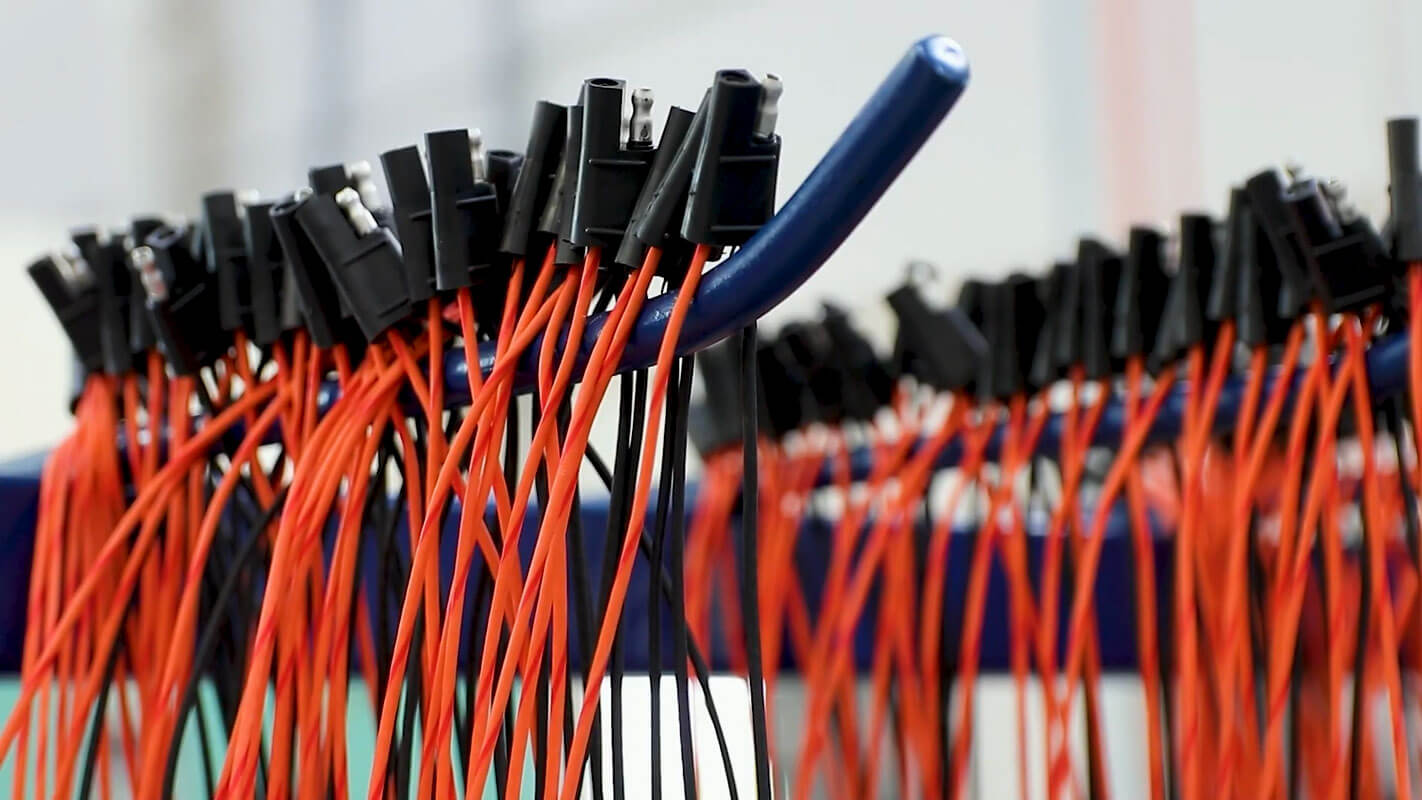
Connector Choices
Picking the right connector isn't just about plugging A into B—it's a cost vs. reliability vs. durability calculation that can make or break a wire harness. Automotive connectors like the USCAR-2 standard ones handle 10–15 insertion cycles before wear becomes critical, while industrial M12/M8 circular connectors survive 50–100 cycles thanks to their IP67-rated seals. Fail to match the cycle rating, and a 0.50 connector can cause a 500 field repair when it loosens after 2 years of vibration.
Pin count and size directly impact cost. A basic 2-pin Deutsch DT connector runs 1.20–1.80 per pair, but jump to a 12-pin version, and the price hits 8–12 due to complex molds. For high-density boards, 0.5mm pitch FFC connectors save space but demand ±0.05mm PCB alignment precision—get it wrong, and 15% of contacts may fail within 500 insertions.
Material choice is critical for temperature and corrosion. Nylon housings work fine in -40°C to 105°C environments (cheap at 0.30–0.70/unit), but PPS or LCP plastics are needed for 125–150°C engine bays, adding 50–80% to the cost. Contacts plated with 3µm of gold last 10x longer than tin-plated ones in humid conditions but cost 5x more per pin.
Current rating is often oversimplified. A 2.5mm² terminal might be rated for 16A at 20°C, but in a tight bundle at 80°C, derating slashes that to 9A. High-voltage EV connectors (e.g., HVDC 630V) use double-lock systems and 6mm creepage distances to prevent arcing—skip these, and 5% of units may short within 3 years.
Mating force matters more than you'd think. A 40N insertion force on a 4-pin connector is manageable, but a 64-pin version at 5N per pin requires 320N total—enough to bend PCB mounts if not guided properly. ZIF (zero insertion force) connectors solve this but add 20–30% to assembly time due to latches.
The hidden cost of mismatches: Using a 0.80 waterproof connector instead of a 0.30 unsealed one seems expensive—until humidity causes 12% of unsealed units to corrode within 18 months, triggering $20,000+ in warranty claims. Rule: Spend upfront on connectors rated for the harshest real-world case, not just lab conditions.
Shielding Options
Shielding in wire harnesses isn't optional—it's mission-critical protection against EMI/RFI that can corrupt signals, crash systems, or even cause safety hazards. Unshielded cables in industrial settings experience 30-50% more signal errors than shielded ones when placed near VFDs or radio transmitters. The right shielding can mean the difference between a 99.9% reliable CAN bus and a vehicle ECU throwing 5-10 false error codes per hour.
"A 90% coverage braided shield reduces EMI noise by 35dB at 100MHz—enough to protect sensitive medical equipment from MRI interference costing $300k/hour in downtime."
Three main shielding types dominate the market, each with trade-offs:
| Shield Type | Coverage % | Frequency Range | Cost (vs. Foil) | Best For |
|---|---|---|---|---|
| Braided Copper | 85-95% | 10MHz-10GHz | 3.0x | Military, aerospace, medical |
| Spiral Wrapped | 70-80% | 1MHz-1GHz | 1.5x | Robotics, servo motors |
| Foil + Drain Wire | 60-70% | 100kHz-100MHz | 1.0x | Automotive sensors, HVAC |
Braided shields (typically 96% pure copper) offer the best protection but add 15-20% weight and require 50% more assembly time due to complex termination. They’re mandatory in MIL-DTL-27500 spec cables for fighter jets, where even 0.1µV noise can disrupt radar systems.
Foil shields (aluminum-polyester laminate) are cheaper ($0.12/meter) and thinner (0.05mm vs. braid’s 0.3mm), but their 60% coverage struggles above 50MHz. In automotive 48V mild-hybrid systems, foil shields work for LIN buses (19.2kbps) but fail for Ethernet (100Mbps), where crosstalk causes 12% packet loss.
Hybrid designs combine both: a foil layer for high-frequency (>1GHz) noise and a braid for low-frequency (<10MHz) interference. These cost 40% more but prevent 85% of EMI-related warranty claims in industrial PLCs.
Grounding matters as much as the shield itself. A 360° clamp gives 10dB better noise rejection than a pigtail ground, which can act as an antenna above 30MHz. In CAT6 cables, improper grounding causes 3-5dB insertion loss, cutting PoE power delivery by 20% over 100m.
Durability tests reveal harsh truths: After 5,000 flex cycles, spiral shields fail 30% faster than braids due to strand fatigue. For 7-axis robotic arms moving 200 times/minute, only double-layer braids survive 2+ years without shield cracking.
Protective Coverings
Wire harnesses don’t just need to work—they need to survive real-world abuse without failing. That’s where protective coverings come in, and the wrong choice can turn a 10-year design life into 2 years of constant repairs. PVC spiral wrap is the go-to for 60% of automotive harnesses because it’s cheap ($0.15/meter) and easy to install, but it cracks after 500 hours of UV exposure or -40°C cold cycles. Switch to corrugated nylon conduit, and you get 5x the abrasion resistance for 3x the cost, which pays off when routing through sharp sheet metal edges that would slice through PVC in under 12 months.
Heat-resistant sleeves are non-negotiable near engines or exhausts. Fiberglass sleeves handle 500°C for short bursts, while silicone-coated fiberglass survives continuous 200°C environments—critical when a turbocharger dumps 150°C air onto nearby wiring. Skip these, and 20% of engine bay harnesses show insulation cracks by 50,000 miles. For extreme chemical resistance, PTFE braided sleeves cost $8/meter but laugh off hydraulic fluid, fuel, and brake cleaner—unlike cheaper materials that swell 15% in volume after 6 months of oil exposure.
Abrasion data doesn’t lie: A 0.5mm-thick PET braided sleeve lasts 3x longer than vinyl tape when rubbed against a 120-grit surface at 10N of force. In mining equipment, where harnesses face 2,000+ abrasion cycles per day, only polyurethane-coated textiles survive 5+ years without wear-through. Split loom tubing works for office equipment, but in agricultural machinery, dust ingress causes 40% of failures within 3 years—sealed woven wraps cut that to under 5%.
Weight savings add up fast. Thin-wall textile sleeves shave 300 grams per meter off aerospace harnesses compared to metal conduits—critical when 1kg of weight reduction saves 10,000 in fuel over a jet’s lifespan. But in heavy industrial settings, steel-braid armor adds 2kg/meter but prevents 50,000+ downtime when a forklift crushes unprotected cables.
Testing and Standards
Wire harnesses aren’t just plug-and-play—they must survive years of abuse without failing. That’s why testing isn’t optional; it’s the difference between a reliable product and a recall disaster. Automotive harnesses undergo 50+ individual tests to meet ISO 19642, with 12% of prototypes failing the first round due to insulation cracks, terminal fretting, or EMI issues. In aerospace, a single DO-160G-compliant test suite can cost 25,000, but skipping it risks $2M+ in FAA non-compliance fines.
Key tests break down into three categories:
| Test Type | Standard | Pass Criteria | Real-World Impact |
|---|---|---|---|
| Continuity Check | ISO 19642 | <0.5Ω resistance variance | Prevents 12% of warranty claims from loose crimps |
| Hi-Pot (Dielectric) | UL 758 | No breakdown at 1.5kV for 60s | Ensures 99.9% safety in 480V industrial motors |
| Vibration Fatigue | SAE J2030 | 10M cycles at 5–500Hz | Cuts 40% of failures in off-road vehicles |
| Salt Spray Corrosion | ASTM B117 | No degradation after 96h | Prevents 8% of marine harness failures |
| Flex Life | IEC 60245 | 20,000+ bends at -40°C to 125°C | Critical for robot arms moving 500x/day |
Continuity testing catches 80% of manufacturing defects—like a 0.3mm misaligned terminal that increases resistance by 2Ω, causing 5°C hotter joints over time. Hi-pot tests at 3x operating voltage (e.g., 900V for a 300V harness) weed out insulation flaws that could lead to arc faults in 0.01% of units—rare, but catastrophic in EV battery packs.
Vibration testing separates robust designs from failures. A 50g acceleration test (mimicking off-road truck impacts) reveals if crimp joints loosen after 2M cycles—a common cause of 18% of drivetrain errors in heavy machinery. Salt spray tests expose cheap tin-plated terminals that corrode 3x faster than gold-plated ones in coastal climates, turning a 10-year harness into a 4-year liability.
Flex endurance is where budget cuts show. A $0.20/meter PVC jacket cracks after 5,000 bends, while TPE-insulated wires last 50,000+ cycles—key for seat harnesses adjusted 20x/day. EMI immunity tests (like ISO 11452-4) prove if 90% braid coverage actually blocks 30dB of noise, or if signals corrupt when 5V sensors sit near 400A battery cables.
In summary, wire harness manufacturing primarily uses tin-plated copper conductors (0.13-25mm² gauges) with PVC (70-105°C) or XLPE insulation (150°C rated). Nylon or PBT connectors withstand 100+ mating cycles, while braided copper shielding (85% coverage) reduces EMI by 30dB. Corrugated tubing (40% flexibility) and flame-retardant sleeves (UL94 V-0) provide mechanical protection. All components must pass ISO 6722 bend tests (3,000+ cycles) and IP67 water resistance (1m/30min). Automated crimping ensures <0.5mΩ contact resistance, with hi-pot testing at 1.5kV for 60s detecting insulation flaws. RoHS compliance is mandatory for all materials.
