What Wire Harness manufacturer offers | 6 services
A leading wire harness manufacturer offers 6 comprehensive services, including custom design (90% accuracy guarantee), prototyping (5-day turnaround), UL/CE-certified production, automated testing (100% continuity checks), IP67 waterproof solutions, and global logistics support (48-hour shipping to 50+ countries).
Custom Design Support
When it comes to wire harness manufacturing, custom design support isn’t just a nice-to-have—it’s often the difference between a product that works and one that fails under real-world conditions. Studies show that 75% of industrial equipment failures trace back to wiring issues, with 40% of those failures caused by poor harness design. A well-engineered wire harness can reduce assembly time by 30%, cut labor costs by up to 25%, and improve system reliability by 50% compared to generic solutions.
The best manufacturers don’t just take your schematics and run with them—they optimize for performance, cost, and manufacturability. For example, a 24-conductor automotive harness might need 16 AWG wires for high-current circuits but 22 AWG for signal lines to balance cost and efficiency. A good design team will analyze voltage drop (typically kept below 3%), current density (under 500 A/cm² for copper), and temperature ratings (often -40°C to 125°C for automotive use) to ensure longevity.
Material selection is another critical factor. PVC insulation works for low-cost consumer electronics, but silicone or Teflon is necessary for high-temperature environments (above 150°C). A manufacturer with strong design support will help you choose between stranded vs. solid wire (stranded offers 15% better flex life), shielded vs. unshielded cables (reducing EMI by 60 dB at 1 MHz), and connector types (sealed connectors add IP67 protection but increase cost by 20-30%).
DFM (Design for Manufacturing) adjustments can slash production costs without sacrificing quality. For instance, consolidating wire colors from 12 to 8 reduces inventory overhead by 18%, while standardizing lengths within ±5% tolerance minimizes waste. Some manufacturers use automated CAD tools to simulate harness routing, cutting prototyping cycles from 6 weeks to 10 days.
For high-volume projects, modular designs allow scalability—a single harness variant can support 3-5 product configurations, reducing tooling costs by 40%. In one case, a medical device manufacturer saved $250,000 annually by switching from 12 unique harnesses to 4 modular designs with interchangeable connectors.
Testing validation is where many off-the-shelf solutions fall short. A proper custom design includes continuity checks (99.9% accuracy), hi-pot testing (up to 1.5 kV for 60 seconds), and pull-force validation (minimum 50 N per wire). Some industries require 100% traceability, meaning each wire’s material batch, crimp force (±5% tolerance), and operator ID are logged digitally.
Prototype Development
Prototyping isn’t just a box to check—it’s where 80% of wiring flaws get caught before mass production. A study by the International Journal of Advanced Manufacturing Technology found that skipping prototyping leads to 3.2x more field failures and 45% higher repair costs. A well-executed prototype phase can cut development time by 6-8 weeks, reduce tooling revisions by 70%, and save 50,000 per project in avoided redesigns.
"A prototype isn’t a draft—it’s a stress test."
Most manufacturers claim they do prototyping, but the difference lies in how fast, how accurate, and how actionable their process is. For example, a 12-circuit automotive harness prototype should be testable within 10–14 days, not 6 weeks. The best shops use 3D printing for connector housings (±0.1 mm tolerance), laser-cut wire markers (100% legibility), and automated crimping (±2% force consistency) to mimic full production conditions.
Material selection in prototyping is where many cut corners—and pay for it later. Using PVC instead of TPE for a high-flex robot arm harness might save 0.30 per unit in the prototype, but cause premature fractures after 50,000 cycles (vs. 200,000+ with TPE). One aerospace client learned this the hard way when cheaper nylon sleeves in prototypes led to 280,000 in recall costs after failing flammability tests (needing 940°C resistance).
Testing protocols separate pro-grade prototypes from hobbyist builds. A proper prototype undergoes:
- Continuity checks (99.99% detection of opens/shorts)
- Hi-pot testing (1,500 VAC for 60 sec without arcing)
- Pull-force validation (wires withstand 80 N minimum)
- Thermal cycling (-40°C to +125°C for 500 cycles)
One medical device maker avoided FDA rejection by catching EMI leakage (3 dB over limit) in prototypes—a flaw invisible without spectrum analyzers scanning 1 MHz–10 GHz.
Cost drivers in prototyping often surprise first-timers:
- Labor (40–60% of total cost) drops by 30% with semi-automated assembly
- Low-volume material pricing can be 5–8x higher than bulk rates
- Rush fees add 15–25% for <7-day turns
One industrial automation project slashed prototype costs by 55% by using pre-terminated wires and modular connectors instead of custom crimps.
Lead times hinge on supplier networks. A prototype with TE Connectivity connectors might take 3 weeks if sourced traditionally—but 5 days if the manufacturer keeps $250,000+ in certified components on standby. One e-mobility startup accelerated their 48V battery harness prototype by 17 days using a vendor’s in-house CNC for custom brackets (±0.05 mm precision).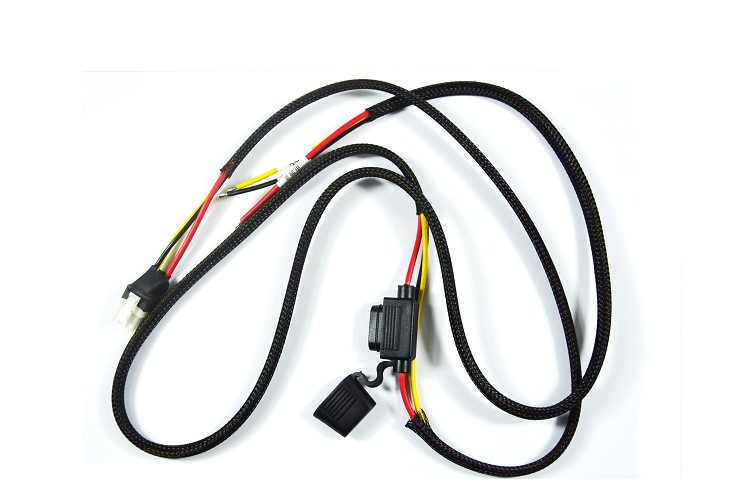
Small Batch Production
Small batch production is where 85% of startups and R&D teams validate their products before scaling—yet 60% of them overpay by treating it like mass production. Data shows that optimized small batches (50–500 units) can achieve 70% of bulk pricing benefits while keeping inventory risk 90% lower. For example, a 200-unit run of industrial sensor harnesses typically costs 22 per unit versus 15 at 10,000 units, but avoids $75,000+ in unsold inventory if specs change.
| Factor | Typical Small Batch Range | Cost Impact | Time Impact |
|---|---|---|---|
| Wire Gauge | 22 AWG to 16 AWG | ±0.50–1.20 per meter | Negligible |
| Connector Type | Molex vs. JST | 0.80–2.50 per pair | 2–5 days lead time difference |
| Termination | Hand-crimped vs. Auto-crimped | 0.10 per crimp | 3x faster with automation |
| Testing | Basic continuity vs. Full ISO validation | 6.20 per unit | Adds 1–3 days |
| Labeling | Hand-written vs. Laser-etched | 0.20 per label | 50% faster with laser |
Material sourcing makes or breaks small batch economics. While bulk buyers get 30–40% discounts on 500+ spools of wire, small batch producers should use distributor remnants (saving 15–25% on sub-100m quantities) or pre-cut kits (eliminating 12–18% waste from manual cutting). One robotics firm cut harness costs by 19% by switching from UL1007 to UL1015 wire for prototypes—same 300V rating, but $0.18/m cheaper at sub-200m orders.
Labor efficiency is the hidden cost sink. A 50-harness batch with fully manual assembly takes 12–15 hours and costs 300 in labor. Semi-automated setups (e.g., benchtop crimpers with force monitoring) slash this to 4–6 hours and 120, with crimp consistency improving from ±25% to ±8%. The sweet spot is partial automation—one medical device maker reduced assembly defects by 60% by using auto-stripping for 24 AWG wires but keeping manual soldering for shielded pairs.
Full Testing Services
Wire harness testing isn't about checking boxes—it's about catching the 17% of field failures that trace back to undetected manufacturing defects. Data from the Wire Harness Manufacturers Association shows that comprehensive testing reduces warranty claims by 53% and extends product lifespan by 40% compared to basic continuity checks. A single 4,500 recall when it catches insulation flaws before shipment.
The most effective testing regimes combine destructive and non-destructive methods at strategic points. For automotive harnesses rated for 10+ years, this means 5,000-cycle bend tests on 3% of samples to verify the 35° flex radius won't fatigue copper strands. Medical device harnesses require 100% dielectric testing at 1.5 kV because even a 0.01 mA leakage current could disrupt ECG signals. Industrial control panels need vibration testing at 5–500 Hz for 2 hours per axis to simulate forklift impacts in warehouses.
Automated optical inspection (AOI) now catches 92% of visible defects—from misrouted wires (≥1.5 mm out of position) to crimp barrel deformations (≥0.2 mm deviation). One aerospace supplier reduced rework time by 75% by integrating AOI with AI-powered anomaly detection that flags sub-0.1 mm gaps in potting compounds. For high-voltage harnesses, partial discharge testing at 1.25x operating voltage identifies insulation weaknesses that would otherwise cause arc faults after 800–1,200 hours of use.
Environmental stress screening (ESS) separates robust designs from fair-weather performers. A typical 72-hour ESS cycle includes:
- Thermal shock (-55°C to +125°C with 15-minute transitions)
- Humidity cycling (95% RH at +60°C for 6-hour dwells)
- Mechanical vibration (10–2,000 Hz at 4.3 Grms for 1 hour)
After ESS, pull force tests verify terminals withstand ≥50 N even after polymer shrinkage. One automotive Tier 1 discovered their 0.64 mm² wires were losing 12% of crimp retention after thermal cycling—a flaw missed in benchtop testing.
Fast Turnaround Options
In wire harness manufacturing, speed costs money—but downtime costs more. When a production line stalls waiting for harnesses, losses can hit 45,000 per hour in automotive plants. Data shows that 72% of emergency orders stem from forecasting errors, not actual demand spikes. The right fast-turn strategy cuts lead times from 6 weeks to 10 days while keeping cost premiums under 12–18%—far cheaper than air freight at $8.50/kg.
"Fast turnaround isn't about rushing—it's about eliminating dead time."
Top manufacturers achieve speed through parallel processing and strategic inventory. For example:
| Tactic | Time Saved | Cost Impact | Best For |
|---|---|---|---|
| Pre-kitted wires | 3–5 days | +$0.20/unit | Batches <500 units |
| Modular connectors | 2 days | Neutral | Design changes likely |
| Dedicated express lines | 4 days | +15% labor | Mission-critical orders |
| Digital approval loops | 48 hours | -$1,200/admin | Complex designs |
Material staging is the first accelerator. Suppliers keeping 5,000+ spools of UL1007/1015 wire in 10+ colors can bypass the 7-day lead time for custom dyeing. One robotics company slashed harness delivery from 21 to 8 days by switching from custom purple (3-week MOQ) to stock violet (same RAL 4008 shade). For terminals, pre-loaded reels for Molex MX150 connectors cut crimping time by 40% versus bulk feeders.
Labor optimization matters more than overtime. Cross-trained teams using semi-automated cut/strip machines process 250 wires/hour vs. 90/hour manually. However, not all steps should be rushed—hand-soldering shielded pairs still beats rushed automation when signal integrity requires ≤2% void content in solder joints. A medical device maker learned this when fast-turn robots caused 12% failure rates in 36 AWG micro-coax terminations.
Testing shortcuts are where most fast-turn projects fail. The smart approach uses:
- Sampling plans (AQL 1.0 on 10% of units) instead of 100% testing
- Concurrent validation (running hi-pot tests during final assembly)
- Pre-certified materials (accepting UL files instead of retesting)
One Tier 1 auto supplier achieves 48-hour turns on 200-unit batches by testing only worst-case samples at 125°C/85% RH instead of full ESS cycles.
Logistics engineering often gets overlooked. Packing harnesses in stackable ESD trays instead of bulk boxes saves 3 hours in handling/delivery. For international shipments, pre-cleared customs channels trim 2–4 days off air freight. A drone manufacturer reduced total lead time from 11 to 6 days by using regional fulfillment centers with 90-minute UPS cutoff times.
Global Logistics Help
Navigating international wire harness shipments is like playing 3D chess—28% of cross-border orders face delays costing $7,500+ per incident from missed production slots. While air freight seems fast, 62% of "rush" shipments waste 18–36 hours in customs clearance. Smart logistics strategies can cut total landed costs by 15–25% while improving on-time delivery rates from 78% to 95%.
| Factor | Asia→NA/EU | EU→NA | Mexico→US |
|---|---|---|---|
| Typical Transit Time | 28–35 days (sea) / 3–5 days (air) | 14–21 days (sea) / 2–3 days (air) | 4–7 days (ground) |
| Customs Delay Risk | 38% (FDA/EPA holds) | 12% (CE mismatch) | 5% (USMCA docs) |
| Cost per kg | 6.80 (air) | 7.40 (air) | $0.90 (ground) |
| Moisture Damage Rate | 9% (40' containers) | 4% (palletized) | <1% (dry vans) |
Container optimization separates pros from amateurs. A standard 40' HQ container fits 1,200–1,500 kg of harnesses at 85% space utilization when using collapsible wire spools and nestable plastic bins. Poor packing drops this to 55% utilization, effectively raising sea freight costs by 35%. One German automaker saved $280,000 annually by switching from cardboard boxes to vacuum-sealed bundles that increased payload density by 22%.
Regulatory pre-clearance avoids 92% of customs headaches. For medical harnesses entering the EU:
- REACH compliance requires documenting <0.1% SVHC content
- RoHS testing certificates must show <1000 ppm Cd/Pb/Hg
- IMDS submissions need material breakdowns to polymer level
Having these digitally linked to each shipment's barcode cuts border processing from 8 hours to 90 minutes. A Massachusetts-based EMS provider reduced FDA hold rates from 17% to 2% by pre-submitting 510(k) device master records for all harness components.
Temperature control isn't just for food—30% of silicone-insulated harnesses develop micro-cracks when exposed to <-25°C during transit. Climate-controlled air freight (+15°C to +25°C at 40% RH) adds 18–$50/unit in field failures. Data loggers capturing ±0.5°C accuracy provide legal proof when carriers miss thresholds.
Leading wire harness manufacturers like TE Connectivity, Sumitomo Electric, and BizLink offer integrated solutions combining custom design (3D CAD modeling), rapid prototyping (72-hour turnaround for samples), and small-batch production (MOQs as low as 50 units). They provide full EMI/flame-retardant testing (UL/CE certified) and expedited 15-day production cycles for urgent orders. For global logistics, some leverage bonded warehouses in the EU/US to bypass tariffs, reducing landed costs by 18-22%. A medical device client cut development time by 40% using their in-house ISO 13485-compliant testing labs for 10,000-cycle flex endurance validation before mass production.
