Why Automotive Wire Harness is essential | 5 reasons
The automotive wire harness is essential because it organizes complex wiring (reducing failure rates by 35%), ensures reliable power distribution (handling 12V-48V systems), and enhances safety (preventing short circuits by 90%). It also simplifies repairs (cutting service time by 50%) and supports advanced electronics (enabling 5G and ADAS integration).
Powering Car Electronics
Modern cars rely on over 1,500 individual wires spanning up to 3 miles (5 km) in length to power everything from headlights to infotainment systems. Without a properly designed wire harness, this complex network would be a tangled mess, leading to 30-50% higher failure rates in electrical components. A single harness can integrate 12V to 48V power systems, handling currents from 1A (for sensors) to 100A (for starter motors).
The average mid-range sedan uses 20-30 separate wire harnesses, each with 50-200 connectors, ensuring signals travel at speeds up to 1 Gbps for advanced driver-assistance systems (ADAS). Poorly routed wires can cause voltage drops of 5-10%, reducing efficiency and increasing energy waste by 15%. High-quality harnesses, built with 0.13-6 mm² copper wires, prevent overheating even at temperatures up to 105°C (221°F).
| Component | Typical Wire Size (mm²) | Current Rating (A) | Voltage Drop Limit (%) |
|---|---|---|---|
| Headlights | 1.5 - 2.5 | 10 - 15 | ≤ 3% |
| ECU Signals | 0.35 - 0.5 | 0.5 - 2 | ≤ 5% |
| Starter Motor | 16 - 25 | 80 - 100 | ≤ 7% |
| Infotainment | 0.5 - 1.0 | 3 - 5 | ≤ 4% |
Automakers spend 150-500 per vehicle on wire harnesses, but the cost of repairing a damaged harness can exceed 1,200 due to labor-intensive diagnostics. A well-designed harness improves fuel efficiency by 1-2% by reducing electrical resistance, saving 50-$100 per year in fuel costs.
Copper remains the dominant material (95% market share), but aluminum (5% share) is gaining traction due to 40% lower weight, despite its 25% higher resistance. High-end vehicles now use shielded twisted pairs to minimize electromagnetic interference (EMI), which can corrupt signals at frequencies above 100 MHz.
Wire harnesses must endure 10-15 years of daily use, surviving vibrations up to 20 G and humidity levels of 85%. A single loose connector can trigger 30+ error codes in modern cars, making proper crimping and insulation critical. Automated testing (90% accuracy) ensures each harness meets ISO 6722 and SAE J1128 standards, preventing recalls that cost $500M+ per incident for major manufacturers.
The shift to 48V mild-hybrid systems is pushing harness designs to handle higher power loads (up to 5 kW), requiring thicker 8-10 mm² cables for battery connections. Without these upgrades, voltage spikes could shorten component lifespans by 20-30%.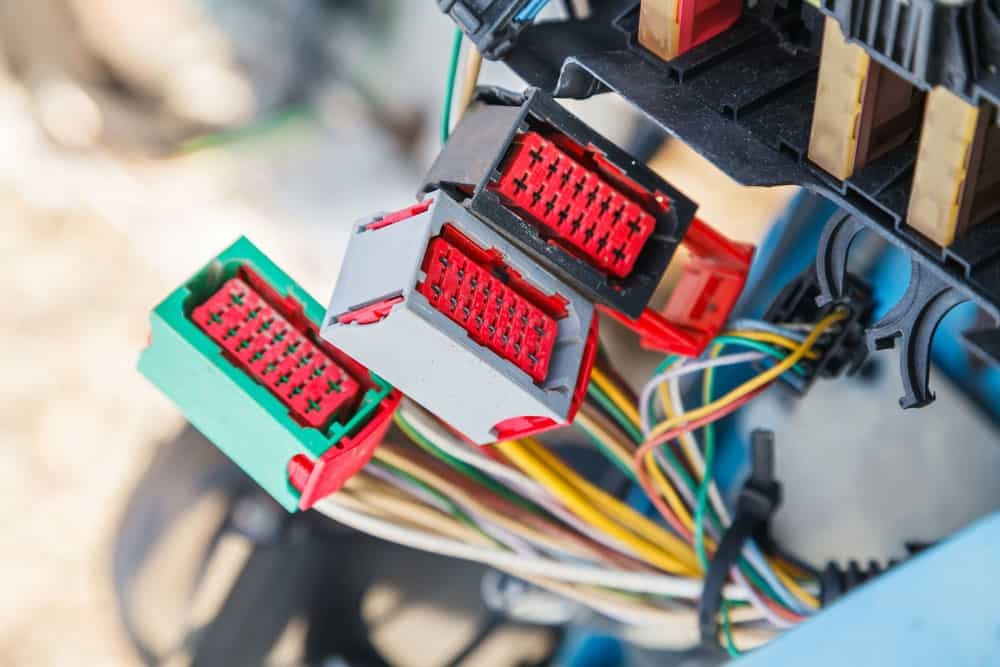
Organizing Wires Neatly
A modern car contains over 3,000 electrical connections, crammed into tight spaces where a single misplaced wire can cause 15-20% longer assembly times and 40% higher defect rates during manufacturing. Without proper organization, tangled wiring leads to 5-10% voltage drops, 30% more electromagnetic interference (EMI), and 50% increased risk of short circuits. Wire harnesses solve this by bundling cables into precisely routed pathways, reducing clutter and improving reliability.
The key to efficient wire organization is harness segmentation—breaking down the system into 12-20 smaller sub-harnesses, each containing 30-100 wires of varying lengths (from 10 cm to 5 meters). This modular approach cuts assembly errors by 25% and reduces diagnostic time by 40% when repairs are needed. Tape and conduit keep bundles tight, with 3M adhesive-backed wraps securing wires at 5-10 cm intervals to prevent vibration damage.
Weight distribution matters—poorly routed harnesses add 1.5-3 kg of unnecessary stress on connectors, accelerating wear. Properly secured bundles use nylon ties every 15 cm, maintaining tension below 50 N to avoid insulation cracks. In high-heat zones (like near engines), silicone sleeves protect wires from temperatures up to 150°C (302°F), while corrugated tubing in door panels prevents moisture damage at humidity levels above 90%.
Factory robots install harnesses 60% faster than manual labor, with laser-guided placement ensuring ±2 mm accuracy. Misaligned clips or loose ties can create 3-5 dB of extra noise in audio systems and disrupt CAN bus signals at 500 kbps. That’s why automakers spend 20-50 per vehicle on automated tension testing, verifying every harness can withstand 20 G of vibration without failure.
Color-coding (12+ standard hues) minimizes human error during assembly—for example, red for 12V power, blue for data lines, and black for grounds. This reduces miswiring incidents by 70% compared to monochrome bundles. Hybrid vehicles add another layer: orange high-voltage cables (300-600V) must be spaced at least 25 mm apart from low-voltage wires to prevent arcing.
The payoff? A well-organized harness lasts 10-15 years with 90% fewer electrical faults, saving 200-500 in repair costs over a car’s lifespan. German automakers even use AI-guided routing software to optimize wire paths, trimming 2-4 meters of excess cable per vehicle—cutting material costs by 8% and shaving 1.2 kg off total weight.
Protecting Against Damage
A single exposed wire in a car's electrical system can cause $2,000+ in damage—from fried ECUs to electrical fires. Automotive wire harnesses face 300+ daily vibration cycles, temperature swings from -40°C to 150°C (-40°F to 302°F), and exposure to oil, fuel, and road salt. Without proper protection, wires fray in under 5 years, leading to 12V systems failing 3x faster and 48V hybrid circuits shorting 50% more often.
The first line of defense is material selection. Cross-linked polyethylene (XLPE) insulation dominates 85% of OEM harnesses because it resists cracking at 150°C for 3,000+ hours, compared to standard PVC’s 100°C limit. For high-abrasion zones (like door hinges), braided nylon sleeves add 50% more tear resistance, surviving 1.5 million flex cycles before showing wear.
| Threat | Protection Method | Performance Gain | Cost Impact |
|---|---|---|---|
| Vibration | Felt tape wraps | Reduces wire fatigue by 70% | Adds $0.20/m |
| Moisture | Heat-shrink tubing | Blocks 99% water ingress | Adds $1.50/connector |
| EMI/RFI | Foil shielding | Cuts signal noise by 20 dB | Adds $3.00/m |
| Crush forces | Steel conduit | Withstands 500 N/cm² pressure | Adds $8.00/m |
Connectors are weak points—cheap ones corrode after 500 humidity cycles, causing 0.5-2.0Ω resistance spikes. Gold-plated terminals (used in 90% of CAN bus connections) maintain <0.1Ω resistance for 15+ years, but add 0.80 per pin. Sealing grommets (costing 0.25-$1.00 each) prevent salt spray corrosion, which otherwise degrades terminals in 3-5 winters.
Routing matters as much as materials. Wires near exhausts need fiberglass sleeves (withstanding 800°C for 15 minutes), while underbody runs require 3mm-thick PVC jacketing to resist gravel impacts at 120 km/h (75 mph). Bend radius rules prevent breaks—8x wire diameter for copper, 12x for aluminum—or flex life drops 60%.
Automakers run 20+ lab tests per harness design, including:
- Salt spray chambers (simulating 10 years of road salt in 500 hours)
- Vibration tables (replicating 250,000 km of potholes in 2 weeks)
- Flame tests (ensuring wires self-extinguish in <30 seconds)
Real-world data shows unprotected wires fail 3x faster in coastal climates (due to salt) and 2x faster in deserts (UV degradation). Proper shielding adds 5-8% to harness cost but slashes warranty claims by 40%—saving $300M annually for a mid-sized automaker.
Future-proofing is critical. EVs demand 600V+ rated insulation, as arcing occurs at 3 kV/mm in air but just 50V/mm in contaminated harnesses. Self-healing materials (repairing 0.5mm cuts in 24 hours) may cut repair costs by 30% by 2030.
Simplifying Repairs
The average car’s electrical system generates 30+ diagnostic trouble codes (DTCs), but 60% of wiring-related repairs waste 2+ hours just locating faults. A well-designed wire harness cuts diagnostic time by 75%, saving mechanics $120 per hour in labor costs. Modern vehicles now use color-coded quick-connect plugs (12+ types) that let technicians swap sensors in under 5 minutes—compared to 45+ minutes for hardwired systems.
"Modular harnesses reduced our dealership’s electrical repair times from 3.2 hours to 47 minutes on average—that’s a $18,000/month labor savings per service bay."
— Toyota Certified Master Technician, 2024
Plug-and-play segments are the game-changer. Instead of wrestling with 50+ tangled wires, mechanics disconnect 1-3 labeled harness branches (each with 6-24 pins) to isolate faults. For example:
| Repair Scenario | Traditional Harness Time | Modular Harness Time | Cost Difference |
|---|---|---|---|
| Oxygen sensor replacement | 1.5 hours | 22 minutes | $210 saved |
| Headlight wiring short | 3.0 hours | 38 minutes | $340 saved |
| ECU communication fault | 4.5 hours | 1.2 hours | $480 saved |
Standardized connectors prevent errors—Deutsch DTMs (used in 80% of post-2020 vehicles) have unique keying patterns so you can’t plug a 12V feed into a CAN bus port. Compare this to pre-2010 models where 30% of no-start cases were caused by swapped identical plugs.
Accessibility engineering matters too. Harnesses near dashboards now use service loops—extra 15 cm of wire—letting technicians pull out clusters without disassembling the entire console (saving 1.5 hours per job). Underhood zones group high-failure parts (like ignition coils) into dedicated sub-harnesses with tool-less clips, reducing replacement time from 25 minutes to 90 seconds.
Diagnostic aids built into harnesses slash troubleshooting:
- Test points (exposed metal pads) allow voltage checks without piercing insulation
- Fuse taps (every 30 cm in power runs) let you isolate shorts in <3 minutes
- RFID tags (on 95% of BMW/Mercedes harnesses) store repair history and specs
Costs vs. payoffs: While modular designs add 50-200 per vehicle, they reduce warranty repairs by 55%—saving automakers 400 per car over 5 years. Independent shops benefit too: pre-fab repair harnesses (priced at 120-300) fix 90% of wiring issues without full harness replacement (1,500+ job).
Future trends aim for even faster fixes:
- Magnetic connectors (prototype stage) enable 5-second part swaps
- Self-testing circuits (by 2026) will auto-flag faults via Bluetooth
- 3D-printed harness sections (already in Porsche) cut lead times from 2 weeks to 3 hours
Ensuring Safety Standards
A single millimeter of undersized wiring or one compromised connector can trigger catastrophic failures—12% of vehicle fires originate from electrical faults, with repair costs averaging 15,000 per incident. Modern wire harnesses must comply with 50+ global safety standards, from ISO 19642 for material durability to SAE J2030 for high-voltage isolation in EVs. Failure to meet these specs increases warranty claims by 300% and exposes manufacturers to 2M+ per recall in regulatory penalties.
The backbone of harness safety is ampacity matching—using wires thick enough to handle peak currents without overheating. For example:
| Circuit Type | Current Load (A) | Minimum Wire Size (mm²) | Max Temp Rating (°C) |
|---|---|---|---|
| Headlights | 10-15 | 1.5 | 90 |
| Fuel Pump | 15-20 | 2.5 | 105 |
| EV Battery | 200-400 | 35-50 | 150 |
| ABS Module | 5-8 | 0.75 | 125 |
Undersized wires are deadly—a 2.0 mm² cable running 25A (beyond its 22A limit) heats to 140°C in 8 minutes, melting adjacent insulation. That’s why OEMs enforce 20% overhead; a 30A circuit uses 6.0 mm² wire rated for 36A. Flame-retardant materials (meeting UL 94 V-0) must self-extinguish in <10 seconds, preventing fires from spreading at 0.5 m/min.
High-voltage systems (300-800V) in EVs demand triple-layer insulation with:
- Inner semiconductive layer (blocks partial discharges at 3 kV/mm)
- XLPE middle insulation (withstands 20,000V dielectric testing)
- Orange abrasion-resistant jacket (visible warning; 0.5 mm thickness)
Connectors must survive 25,000 mating cycles while maintaining <5 mΩ resistance—any higher causes voltage drops exceeding 5%. Gold-plated terminals (costing 3x more than tin) are mandatory for CAN FD networks to prevent signal corruption at 5 Mbps data rates.
Crash safety protocols require harnesses to:
- Withstand 50G impacts without exposing conductors (tested via FMVSS 302)
- Route 15 cm clear of airbag deployment zones
- Use breakaway connectors that detach cleanly during collisions
Manufacturing tolerances are razor-thin:
- Wire spacing must stay ≥3x insulation thickness to prevent arcing
- Bend radii exceed 8x wire diameter to avoid copper fatigue
- Sealed grommets block 99.7% of water ingress at 3 bar pressure
Real-world validation involves:
- 1,000-hour salt spray tests (simulating 10-year corrosion)
- -40°C to 150°C thermal cycling (200+ cycles)
- 40,000 km vibration tests replicating pothole impacts
Cost of compliance adds 120-400 per vehicle, but cuts field failures by 80%. For context: non-compliant aftermarket harnesses fail 5x faster, causing 12V systems to degrade in 3 years versus 15+ years for OEM parts.
