Wire Harness applications in industries | 4 uses
Wire harnesses are critical in automotive manufacturing, with modern vehicles containing over 1,500 individual wires spanning 1.5 miles. Aerospace applications use PTFE-insulated harnesses capable of withstanding -65°C to 260°C extremes. Industrial robots employ flexible harnesses with 500,000+ bend cycles, while medical devices use miniature coaxial bundles (0.81mm OD) for signal integrity. Each application requires specific materials, from high-temp silicones to EMI-shielded twisted pairs.
Wiring Cars and Trucks Efficiently
Modern vehicles rely on wire harnesses to manage complex electrical systems efficiently. A typical car today contains 1,500–2,000 individual wires, spanning 1.5–2.5 miles (2.4–4 km) in length, bundled into 12–15 major harnesses. These harnesses reduce installation time by 30–40% compared to loose wiring, lowering labor costs by 50–100 per vehicle. In trucks and commercial vehicles, harnesses handle higher loads—up to 600V in electric models, with current capacities ranging from 10A to 300A depending on the application.
Automakers prioritize weight reduction, and optimized harness designs save 3–5 kg per vehicle, improving fuel efficiency by 1–2%. High-temperature-resistant materials (withstand -40°C to 150°C) ensure reliability in engine bays, while sealed connectors prevent moisture-related failures (reducing warranty claims by 15–20%). With the rise of EVs, wire harness demand is growing at 8–10% annually, driven by 48V systems, battery management wiring, and high-speed data cables for autonomous driving.
1. Engine and Powertrain Wiring
Wire harnesses in combustion engines manage sensors, injectors, and ignition systems. A V6 engine harness typically has 50–80 connectors, handling 5–20A currents with 600V insulation resistance. In EVs, battery harnesses carry 300–800V DC, using 35–95 mm² cross-section cables to minimize voltage drop below 2%.
| Parameter | Gasoline Engine | Electric Vehicle |
|---|---|---|
| Voltage Range | 12V–48V | 300V–800V |
| Max Current | 20A | 300A |
| Wire Gauge | 0.5–4 mm² | 35–95 mm² |
| Temp Resistance | -40°C to 125°C | -40°C to 150°C |
2. Safety and ADAS Systems
Advanced driver-assistance systems (ADAS) require shielded harnesses for CAN FD (5 Mbps) and Ethernet (1 Gbps) signals. Radar and camera cables need 90%+ EMI shielding to prevent interference. A single ADAS harness contains 20–30 twisted pairs, with impedance controlled within 100Ω ±10% for signal integrity.
3. Body and Comfort Wiring
Door harnesses include 8–12 wires for power windows, locks, and mirrors, using 0.35–0.5 mm² conductors. Seat heating systems require 2–3A per zone, with PTC elements regulating temperature to 40°C max. Overhead console wiring (for sunroofs, lights) uses flexible flat cables (FFC) to fit tight spaces.
4. Commercial Vehicle Durability
Truck harnesses face higher vibration (tested at 5–500 Hz, 50 m/s²), so corrugated conduit protects wires from abrasion. A Class 8 truck harness lasts 1M+ miles, with 500+ crimped terminals rated for 10,000+ insertion cycles.
Cost and Efficiency Factors
- Material Costs: Copper makes up 60–70% of harness cost. Switching to aluminum (for non-critical circuits) saves 20–30% weight but increases resistance by 40%.
- Automation Impact: Robotic harness assembly cuts labor by 50%, with machines placing 500–1,000 wires/hour vs. 100–200 manually.
- Failure Rates: Poor crimps cause 40% of harness failures, while moisture ingress accounts for 25%. OEMs enforce IPC/WHMA-A-620 standards to keep defect rates below 50 PPM.
Wire harnesses are evolving with smaller connectors (e.g., 0.64 mm pins), high-speed data cables, and modular designs for easier repairs. As vehicles add more electronics, optimized harnesses remain critical for performance and cost control.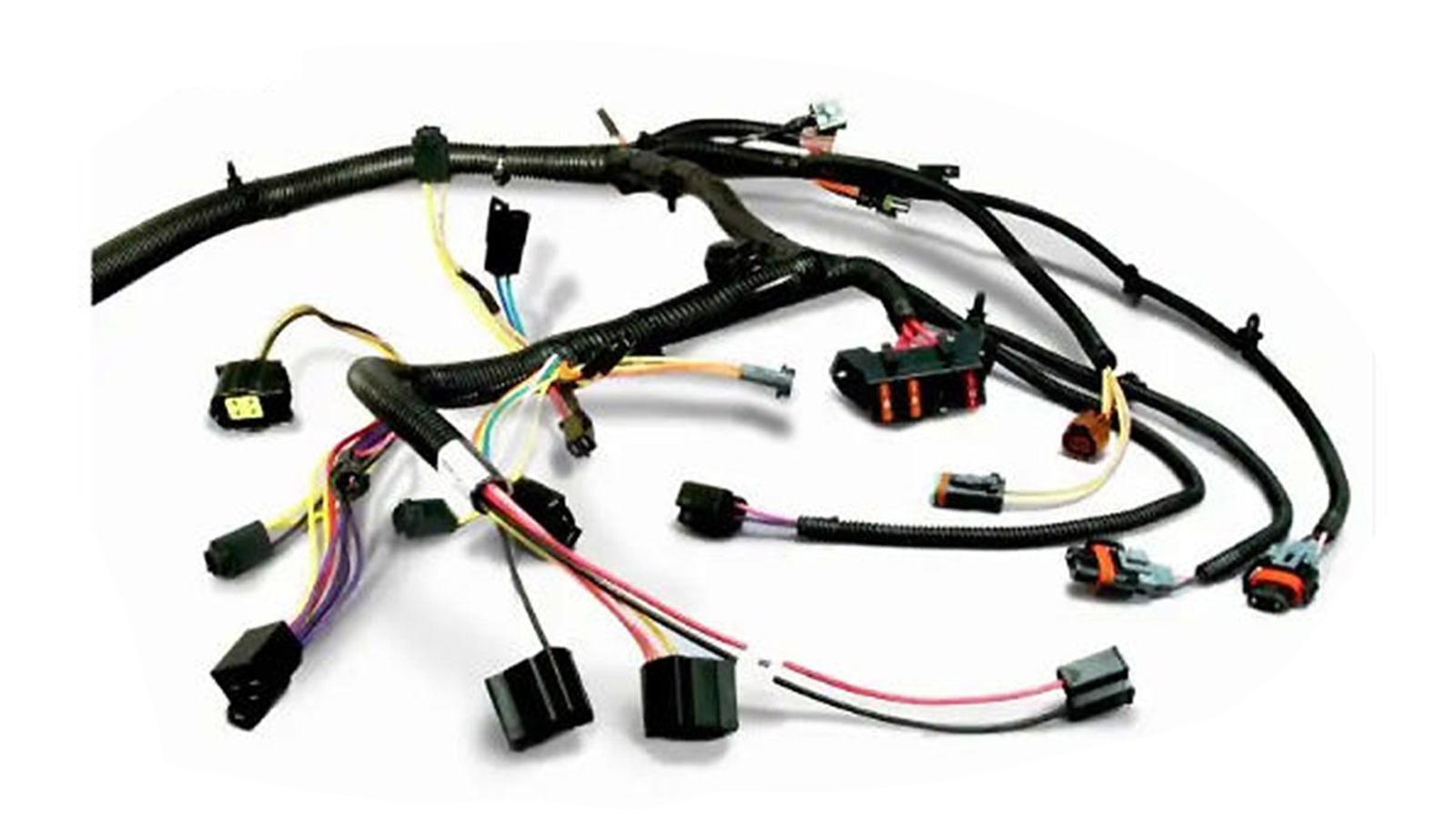
Connecting Home Appliances Safely
Home appliances rely on wire harnesses to deliver power and signals efficiently while preventing electrical hazards. A typical refrigerator uses 3–5 internal harnesses, with wires rated for 10–15A at 120V/240V and insulation that withstands -20°C to 105°C. In washing machines, vibration-resistant harnesses last 8–12 years, surviving 1,000+ spin cycles at 1,200 RPM.
Poor wiring causes 25–30% of appliance failures, with short circuits accounting for 40% of fire risks in residential settings. Modern harness designs reduce these risks by using flame-retardant PVC (UL 94 V-0 rated) and 600V dielectric strength insulation. Energy-efficient appliances now integrate 18–22 AWG wiring to minimize power loss, cutting standby consumption by 0.5–1.5W per device.
The global appliance wire harness market is growing at 6–8% annually, driven by smart home adoption. A single smart oven may contain 50+ connectors for sensors, touchscreens, and Wi-Fi modules—up from 10–15 in traditional models.
Power Delivery and Heat Resistance
High-wattage appliances like microwaves and air fryers demand harnesses that handle 1,500–2,000W loads without overheating. Wires in these systems use 105°C-rated insulation, with thicker 14–16 AWG conductors to keep temperature rise below 30°C above ambient. Clothes dryers, which run for 30–90 minutes per cycle, require harnesses with 300V+ ratings and oil-resistant jackets to endure lint and moisture exposure.
Example: A 240V electric stove draws 30–50A, necessitating 6–8 AWG copper wires with 200°C thermal stability. Loose connections here can cause 5–10% voltage drop, reducing heating efficiency by 15–20%.
Vibration and Mechanical Stress
Washing machines subject harnesses to 5–10G vibrations during spin cycles. Manufacturers use pre-molded strain reliefs and high-flex conductors (1M+ bend cycles) to prevent wire fatigue. Dishwashers face similar challenges, with harnesses exposed to 70°C water spray and 80% humidity daily.
Smart Appliance Complexity
Modern refrigerators with touchscreens and Wi-Fi use ribbon cables for data transmission, carrying USB 2.0 (480 Mbps) and LVDS (1–2 Gbps) signals alongside 12V power lines. These harnesses must maintain impedance within 10% tolerance to avoid signal degradation. A single smart fridge’s harness can include 20+ shielded twisted pairs to prevent interference from compressors and inverters.
Cost and Reliability Trade-offs
- Copper vs. Aluminum: While copper wires cost 30–40% more, they offer 50% lower resistance and 10× longer lifespan in high-current apps. Aluminum is sometimes used in low-power sections (e.g., LED lighting) to save 0.50–1.00 per unit.
- Automated Testing: Post-assembly hipot tests (1,500V AC for 1 minute) catch 95% of insulation defects, reducing field failures to <0.1%.
- Modular Designs: Dishwashers now use quick-connect harnesses that cut repair time from 2 hours to 20 minutes, lowering service costs by 80–120 per call.
Powering Industrial Machines Reliably
Industrial machines demand wire harnesses that can withstand extreme conditions while delivering consistent power and signal integrity. A single CNC machine uses 50–100 meters of wiring across 15–20 separate harnesses, handling currents from 5A for control signals up to 400A for spindle motors. These systems operate 16–24 hours daily, requiring harnesses rated for 50,000+ flex cycles and 200°C+ temperatures near motors and drives.
Voltage fluctuations in factories can reach ±10% of nominal 480V, so industrial harnesses use 600V–1kV rated insulation to prevent breakdowns. Poor connections cause 18–22% of unplanned downtime, costing manufacturers 10,000–50,000 per hour in lost production. Modern solutions like shielded VFD cables reduce EMI-induced failures by 40–60%, while IP67-rated connectors block dust and coolant ingress in machining centers.
The industrial wire harness market is growing at 7–9% annually, driven by automation. A single robotic work cell now contains 200–300 crimped terminals, each tested to withstand 25N pull force and 1,000+ mating cycles.
Critical Requirements by Machine Type
| Machine Type | Voltage | Current | Key Challenges | Harness Solutions |
|---|---|---|---|---|
| CNC Mills | 240V–480V AC | 50–400A | Coolant immersion, vibration | Oil-resistant jackets, strain relief |
| Injection Molders | 380V–600V | 100–800A | Cyclic thermal stress | High-temp silicone insulation |
| Industrial Robots | 48V DC | 10–50A | Constant flexing | Continuous flex cables (5M+ cycles) |
| Conveyor Systems | 120V–480V | 20–200A | Abrasion, dust | Steel-braided exteriors |
High-Current Power Distribution
Heavy machinery like stamping presses require 500MCM cables to deliver 800A at 480V with less than 3% voltage drop. These use tin-plated copper strands to resist oxidation, maintaining <0.1Ω resistance per 100ft. For servo motors, 4–6mm² shielded cables prevent EMI from corrupting encoder signals traveling at 1–2MHz.
Motion Control Wiring
Robotic arms need 8–12 core cables that bend 3–5 million times before failure. Torsion-rated harnesses for rotary joints maintain signal integrity even when twisted ±360° at 15 RPM. Manufacturers test these to IEC 61076-2-101, ensuring <100mΩ contact resistance after 50,000 dynamic cycles.
Harsh Environment Survival
In steel mills, harnesses face 80°C ambient temps plus 1,200°C radiant heat from nearby furnaces. Special fiberglass sleeves reflect heat, keeping internal wires below 105°C. For food processing plants, FDA-compliant TPE jackets resist pH 2–12 chemical exposure during washdowns.
Predictive Maintenance Integration
Modern harnesses embed IoT sensors to monitor:
- Insulation resistance (>5MΩ required)
- Conductor temperature (alerts at 90°C+)
- Vibration levels (warning at 5G+)
This data cuts failure rates by 35–45% through early intervention.
Cost vs. Performance Optimization
- Conductor Materials: Oxygen-free copper (OFC) costs 20% more than standard copper but reduces energy losses by 3–5% in high-frequency applications.
- Modular Designs: Quick-disconnect harnesses slash replacement time from 8 hours to 45 minutes, saving $1,200+ in labor per incident.
- Testing Protocols: 100% hipot testing at 2.5kV catches 98% of defects, versus 70% with sampling methods.
As factories adopt 24V DC microgrids and EtherCAT (100Mbps) communications, harnesses must evolve with:
- Smaller 22–28 AWG wires for data lines
- Composite shielding (foil + braid) for 5G interference suppression
- UV-resistant coatings for outdoor robotics
Reliable wiring remains the unsung hero of industrial productivity—where every 0.1Ω saved translates to $500+/year in energy costs for a single machine.
Supporting Medical Equipment Precisely
Medical wire harnesses operate in life-critical environments where failure isn’t an option. An MRI machine contains over 5 km of wiring across 200+ shielded cables, transmitting signals as faint as 1 µV while blocking 3 Tesla magnetic fields. Patient monitors use 24–28 AWG wires with medical-grade silicone insulation that survives 1,000+ autoclave cycles at 135°C.
A single defective connection in a surgical robot can cost $250,000+ in litigation, so hospitals demand <0.001% defect rates—10x stricter than automotive standards. The rise of portable devices has pushed harness weights down to <50g for neonatal monitors, using 0.1mm diameter conductors that flex 500,000+ times without breaking. The medical cable market is growing at 12% annually, fueled by IoT-enabled devices requiring USB 3.0 (5 Gbps) and PoE++ (71W) compatibility.
Critical Reality: An ECG cable carrying 0.5–5 mV signals must maintain >100dB noise rejection—equivalent to hearing a whisper in a jet engine.
Precision Engineering for Life-Saving Gear
1. Imaging System Challenges
CT scanners rotate harnesses 3 times per second while maintaining 10 Gbps fiber-optic data streams with <0.01% packet loss. The cables endure 15G centrifugal forces, requiring Kevlar-reinforced strain reliefs. Any impedance mismatch over 50Ω ±2% distorts images, potentially masking 2mm tumors.
2. Surgical Robotics Reliability
Da Vinci surgical arms contain 400+ micro-coaxial cables with 0.05mm pitch connectors, each rated for 10,000+ insertions. Force feedback sensors need 24-bit ADCs fed by harnesses introducing <1µV noise. A 5V power line sagging to 4.75V could stall a robotic scalpel mid-incision.
3. Patient Monitoring Constraints
ICU multi-parameter monitors bundle 12–18 leads in a 6mm diameter cable, with each wire’s capacitance balanced within 50pF/m to prevent waveform distortion. Wireless EEG headsets now use 0.3mm flat flex cables that consume <3mW per channel to extend battery life to 72+ hours.
4. Sterilization Survival
Endoscope cables face pH 13 cleaning agents followed by 134°C steam sterilization daily. Medical-grade PTFE insulation maintains >10¹⁶Ω resistance even after 2,000 cycles, while laser-marked conductors prevent misconnections during 3am emergency surgeries.
Cost vs. Compliance Tradeoffs
- Material Selection: Medical-grade PVC costs 0.50/meter vs. 3.00/meter for silicone, but fails after 200 autoclave cycles instead of 1,000+.
- Testing Overhead: 100% hi-pot testing at 1.5kV adds $12 per harness but reduces recall risks by 92%.
- Modularity Premium: Quick-disconnect ECG leads cost 40% more but cut replacement time from 20 minutes to 8 seconds during cardiac arrests.
The Silent Evolution
Next-gen medical harnesses are shifting to:
- Bio-compatible silver-coated wires reducing ECG noise by 30%
- Sub-0.1mm Litz wires for 7T MRI compatibility
- Self-disinfecting nano-coatings lasting 5 years between replacements
In healthcare, wiring isn’t just about electrons—it’s about pulse oximetry readings that can’t lag by 200ms, defibrillator currents that must hit 200J ±5%, and endoscope cameras that can’t flicker during brain surgery. Every decimal place in the spec sheet translates directly to patient outcomes.
