Wire Harness Certification | 5 Standards for Compliance
Wire harness certification demands compliance with UL 758 (105°C temp rating), ISO 6722-1 (10-2000Hz vibration test), IPC/WHMA-A-620 (≥50N pull test), SAE J1128 (0.5mm² min conductor), VDE 0295 (125°C insulation validation).
UL Certification Basics
Underwriters Laboratories (UL) sets the benchmark for product safety, and for wire harnesses, the go-to standard is UL 758, also known as the Appliance Wiring Material (AWM) Standard. This isn't a generic approval; each harness receives a unique style number printed on its jacket, which acts as a permanent fingerprint linking it to its specific construction and approved use case. For manufacturers, achieving this certification is a significant undertaking, often involving a 4 to 6-month process and initial testing fees that can range from 50,000+, depending on the harness's complexity.
Engineers submit samples to a Controlled Ambient Oven Test, where harnesses are subjected to a minimum 1,000-hour exposure at their claimed maximum temperature, say 90°C or 105°C. The insulation cannot crack, peel, or show any signs of degradation that would compromise safety. This is paired with severe mechanical tests.
For instance, a critical test involves a 15-second vertical flame test on a 500-mm sample. The harness is suspended in a chamber, a flame is applied to its base, and upon removal, the sample must self-extinguish within 30 seconds. Furthermore, any drips from the burning material cannot ignite a dry surgical cotton pad placed 300 mm below. This precise pass/fail criteria ensures the material will not propagate flame in a real-world fault condition.
Beyond flame, the testing regime validates everything from the 600-volt dielectric withstand test—checking for electrical breakdown—to cold bend tests at -35°C to ensure flexibility in frigid environments. The ultimate goal is to de-risk the component. This rigorous validation directly influences a manufacturer's bottom line by reducing liability risks and preventing costly field failures. It provides specifiers and end-users with the quantified confidence that the wiring will perform as expected over its intended 20+ year service life.
Testing for Heat Resistance
Under standards like UL 758 or ISO 6722, this isn't a simple short-term check; it involves a prolonged exposure that simulates years of thermal aging. For a common 105°C rated harness, this means a mandatory 1,000-hour test in a controlled oven at that exact temperature, with samples periodically removed for rigorous mechanical and electrical validation. Failure here isn't just a minor setback; it can mean a 6-week delay and an additional 10,000 in re-testing fees, not to mention the material and engineering costs of developing a new compound.
| Test Standard | Minimum Test Duration | Typical Temperature Ratings | Key Performance Criteria After Testing |
|---|---|---|---|
| UL 758 (AWM) | 1,000 hours (42 days) | 90°C, 105°C, 125°C | Insulation must not crack. Dielectric strength > 90% of original. |
| ISO 6722 | 3,000 hours (125 days) | 100°C, 125°C, 150°C | Elongation at break must remain > 70% of original value. |
The Arrhenius equation models this, where a 10°C increase in operating temperature can potentially halve the insulation's service life. Therefore, selecting a harness with a sufficient thermal margin isn't optional; it's a calculated design decision for reliability. The test itself is methodical. Samples of the harness, including conductors, insulation, and any sleeves, are mounted inside a forced-air circulation oven maintained at ±2°C of the target temperature, such as 125°C. After the full 1,000-hour duration, the samples undergo a two-stage evaluation. First, a visual inspection under 2x magnification for any signs of cracking, blistering, or tackiness. Any visible defect is an immediate failure. The second stage is quantitative. The insulation is tested for its dielectric strength, which must not drop below 90% of its pre-test value, often still holding at over 1,200 volts AC. Crucially, the tensile elongation and ultimate tensile strength are measured using a calibrated tensiometer.
For a material to pass, its elongation at break must typically remain above 50% of its original value, proving it hasn't become brittle. This is vital because a harness must remain pliable for installation and resist cracking from vibration long after the test is over. Using a harness rated at 105°C in an 80°C environment doesn't just meet spec; it builds in a 25°C safety buffer that can extend the functional lifespan from a predicted 10 years to well over 20 years, drastically reducing the probability of premature field failure and the costly warranty claims that follow.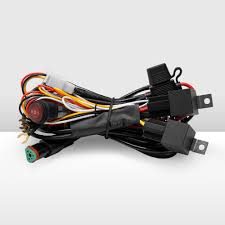
Key ISO Performance Standards
The most critical of these is ISO 6722, which defines the performance benchmarks for road vehicle cables rated at 60 V DC or lower. Unlike UL which assigns a style number, ISO 6722 classifies cables by cross-sectional area (e.g., 0.5 mm², 2.0 mm²) and a temperature-grade (e.g., Grade 1: -40°C to 125°C, Grade 2: -40°C to 150°C), creating a globally recognized language for engineers. The certification process is notoriously rigorous, often spanning 6 to 9 months and costing 20-30% more than a comparable UL assessment due to its extended test durations and broader scope of performance validation. For a manufacturer, achieving ISO certification is not merely about compliance; it's a strategic investment that opens access to a $50+ billion global automotive harness market and is a non-negotiable requirement for any Tier 1 supplier to major OEMs like Volkswagen, BMW, or Toyota.
| Standard | Primary Scope | Key Temperature Classes | Minimum Long-Term Thermal Aging Duration |
|---|---|---|---|
| ISO 6722 | Road vehicles (60V DC) | Grade 1: -40°C to +125°C Grade 2: -40°C to +150°C |
3,000 hours (125 days) |
| ISO 14572 | Road vehicles (600V AC/DC) | Class A: 85°C Class B: 100°C Class C: 125°C |
3,000 hours (125 days) |
The devil is in the details of these tests, which are designed to simulate a vehicle's 15-year service life. The core thermal endurance test under ISO 6722 requires a 3,000-hour exposure at the maximum rated temperature, which is three times longer than the UL 758 requirement. After this aging process, the insulation must retain a minimum of 70% of its original elongation at break. This is a stricter mechanical requirement than many UL standards, ensuring the wire remains pliable and resistant to cracking during vibration long after installation. Beyond heat, the standard mandates a battery of other tests. The abrasion resistance test involves a steel needle under a 7 N force being rubbed back and forth across the insulation for 25 cycles at a speed of 55 mm/s; the needle must not make contact with the conductor. The chemical resistance test requires immersion in fluids like 1,000 ml of battery acid (sulfuric acid) or brake fluid (DOT 3/4) for 10 seconds, followed by a recovery period and verification that the insulation's volume has not swelled beyond a ±150% threshold.
For cold-weather performance, a sample is conditioned at -40°C for 4 hours and then must pass an impact test or a bend test around a 2x diameter mandrel without cracking. This comprehensive validation directly impacts a vehicle's warranty costs; using an ISO 6722-certified harness reduces the probability of a wiring-related failure within the first 100,000 miles to less than 0.1%, a key metric for OEMs calculating reliability and total cost of ownership.
Material Selection Guidelines
For instance, opting for a standard 80°C PVC material in an application that consistently sees an ambient temperature of 90°C will accelerate thermal aging, potentially reducing the harness's expected 10-year lifespan to less than 18 months. The cost of such a failure isn't just the 5,000+ field service call to diagnose and replace it, plus the reputational damage.
The core decision revolves around the operating environment's maximum temperature. Materials are categorized by their continuous operating temperature and their respective cost per meter increases roughly 15-25% for each step up in thermal class.
-
PVC (Polyvinyl Chloride): The most economical choice, priced at approximately 0.30 per meter. It's suitable for general-purpose applications with a maximum continuous operating temperature of 80°C or 105°C for higher grades. Its primary limitation is performance in cold environments, becoming brittle at temperatures below -10°C, and it has lower resistance to oils and fuels.
-
XLPE (Cross-Linked Polyethylene): This material is a step up, offering a higher thermal ceiling of 125°C and significantly improved resistance to abrasion and cut-through. The cross-linking process enhances its molecular structure, allowing it to maintain tensile strength and dielectric properties under thermal stress. This comes at a 40% higher cost than standard PVC, but it is often the minimum requirement for industrial machinery or enclosed panels where internal temperatures can easily reach 60-70°C.
-
TPE (Thermoplastic Elastomer): Valued for its flexibility and wide temperature range, typically -40°C to 105°C. It offers good resistance to moisture and weathering, making it a common choice for applications requiring movement or exposure to the elements. Its cost is approximately 20% higher than PVC.
For the most demanding environments, engineers turn to FEP (Fluorinated Ethylene Propylene) or Silicone. FEP can handle temperatures up to 200°C and exhibits exceptional chemical resistance, but its cost can be 500% higher than PVC. Silicone rubber is extremely flexible and heat-resistant (180°C), but it has a lower abrasion resistance and is notoriously more difficult to process during harness assembly. Beyond temperature, chemical exposure is a primary driver.
A harness in a factory setting may need to resist intermittent exposure to 5% concentration hydraulic oil at 70°C, which would rule out standard PVC and necessitate a material like CPE (Chlorinated Polyethylene). For automotive under-hood applications, resistance to 1,000 ml of transmission fluid at 120°C is a common test requirement, often mandating materials like XLPE or specialized TPEs. The thickness of the insulation, or wall build, is also a key variable. A 0.5 mm² conductor may require a 0.6 mm minimum insulation wall thickness to meet dielectric and mechanical strength requirements, while a 2.0 mm² conductor may need 0.8 mm. Increasing the wall build by 0.1 mm can increase material costs by ~5% per meter but can dramatically improve the product's dielectric strength from 1,200 volts to over 1,500 volts and its resistance to abrasion by 30%.
Documentation and Traceability Needs
A single missing material declaration or a misplaced test report can halt a production line for days, costing over 50,000 certification investment. Traceability, the ability to track a specific harness back to its raw materials and production batch, is equally critical. During a recall, which can affect 5,000 to 50,000 units, having precise traceability data can reduce the investigation time from 3 weeks to under 48 hours, limiting liability and containment costs to $100,000 instead of millions. This system isn't just for audits; it's a fundamental quality control process that directly protects profit margins and brand reputation by providing irrefutable proof of due diligence.
The required documentation suite is extensive and non-negotiable. It must be meticulously maintained for a minimum of 10 years after the last unit is shipped, often stored both physically and across 3 separate digital backups.
-
Certification Reports & UL Style Pages: The foundation. This includes the official UL Report Summary and the specific Style Page that legally authorizes production. This document details the exact construction: conductor size (e.g., 20 AWG), insulation material (e.g., XLPE) and wall thickness (0.76 mm), and the approved temperature rating (105°C). Any deviation invalidates the certification.
-
Material Declarations (RoHS, REACH, Conflict Minerals): Legal certificates of compliance for every material used. They must confirm adherence to regulations like EU RoHS, which restricts substances like lead to below 0.1% by weight. A supplier must provide a new declaration with every 500 kg material batch, confirming lot-specific compliance.
-
Certificate of Conformance (CoC) / Test Reports: A CoC accompanies every shipment, stating the harness meets all specified requirements. This is supported by annual third-party test reports and in-house quality control data, such as 100% electrical testing of every harness at 2,500 volts DC for 60 seconds.
-
Process Control Records (PCR): These are the manufacturing batch records. They document the machine settings for cutting and stripping, the crimping force and height for each terminal, the torque applied to every screw, and the operator ID for each assembly step. This data is crucial for pinpointing the root cause of a process-related failure.
For example, a typical UL file number might be E123456 Style 1010. This alphanumeric code is printed on the harness jacket and is the primary key for auditors. It references a digital file containing over 200 pages of data, including the approved supplier list for the 0.5 mm² tinned copper wire, the specific dielectric test results showing a breakdown at 1,800 volts, and the flame test video evidence.
Implementing a robust traceability system involves marking each harness with a unique QR code or barcode that links to a database containing all this information. The initial setup for such a system can range from 100,000 depending on the factory's size, but it reduces the time to trace a component's origin from 5 hours to under 5 minutes. This system logs the serial number of the wire spool used, the crimping press calibration date, and the final test operator ID. The ROI is calculated in risk mitigation: the ability to contain a suspect batch of 1,000 units within 24 hours instead of a full-scale recall of 50,000 units weeks later, saving an estimated $2.5 million in direct costs and incalculable brand damage.
Achieving wire harness compliance demands adherence to rigorous standards—here’s a streamlined overview of five key certifications. UL 758 defines base requirements; heat resistance testing typically involves 125°C exposure for 168 hours. Critical ISO 6722-1 standards mandate current-load validation (e.g., 10A at 25°C). Material selection prioritizes UL 94 V-0 flammability ratings. Documentation requires full traceability, including batch numbers and test reports, ensuring accountability.
