Wire Harness vs Cable Harness | 3 differences compared
Wire harnesses organize multiple discrete wires (typically 18-24 AWG) with sleeves or conduits, offering modularity for repairs but requiring 30-50% more assembly time. Cable harnesses integrate pre-bundled conductors (e.g., multi-core cables like Cat6 or coaxial), reducing weight by 15-20% and offering better EMI shielding (60-90 dB attenuation).
While wire harnesses handle higher currents (up to 30A per conductor), cable harnesses simplify routing in tight spaces with bend radii as low as 4x diameter.
Wire vs. Cable Structure
When choosing between wire harnesses and cable harnesses, the structural differences directly impact performance, cost, and application suitability. A wire harness typically consists of single-conductor wires (18-28 AWG) bundled together, often with a thin PVC or nylon jacket. In contrast, a cable harness integrates multiple insulated conductors (2-24 AWG) within a single outer sheath, usually made of tougher materials like rubber or thermoplastic elastomers (TPE).
The key distinction lies in current capacity and durability. A standard 16 AWG single wire in a wire harness can handle up to 10A at 60°C, while a 16 AWG multi-conductor cable in a cable harness can sustain 13-15A due to better heat dissipation. Cable harnesses also offer higher crush resistance (up to 250 lbs/in² vs. 150 lbs/in² for wire harnesses), making them ideal for industrial machinery or automotive applications where mechanical stress is common.
Cost-wise, wire harnesses are 20-40% cheaper for low-power applications (e.g., consumer electronics), while cable harnesses add 15-30% to material costs but reduce long-term failure rates by up to 50% in high-vibration environments. For example, in automotive wiring, cable harnesses last 8-12 years compared to 5-8 years for wire harnesses under similar conditions.
Conductor Arrangement & Electrical Performance
Wire harnesses use individual conductors, making them lighter (0.5-1.2 kg/m) and more flexible, but with lower current density (3-5A/mm²). Cable harnesses group conductors tightly, improving current capacity (6-8A/mm²) and reducing electromagnetic interference (EMI) by 30-40% due to better shielding. For high-frequency signals (above 50 MHz), twisted-pair or coaxial cables in cable harnesses reduce signal loss by 15-20 dB/m compared to loose wires.
Mechanical Strength & Environmental Resistance
Wire harnesses are prone to abrasion damage after 50,000+ flex cycles, while cable harnesses endure 100,000+ cycles thanks to reinforced jackets. In extreme temperatures (-40°C to 125°C), silicone-insulated cables maintain 90% flexibility, whereas standard PVC-wrapped wires stiffen below -20°C. Moisture resistance also differs: cable harnesses with IP67-rated sheathing block water ingress for 30+ minutes, while basic wire harnesses fail within 5-10 minutes under the same conditions.
Installation & Maintenance Factors
Wire harnesses are easier to route in tight spaces (e.g., PCBs) due to smaller bend radii (3-5x wire diameter), but cable harnesses reduce labor costs by 20% in complex setups since fewer individual wires need termination. In automotive assembly, a single 12-conductor cable harness replaces 12 separate wires, cutting installation time from 45 minutes to 15 minutes per unit.
Cost vs. Longevity Trade-offs
For low-voltage applications (under 50V), wire harnesses cost 0.10-0.50 per meter, while cable harnesses range from 0.30-1.20 per meter. However, in harsh environments (e.g., robotics, aerospace), cable harnesses reduce downtime costs by 40-60% over a 5-year period. A study on industrial automation systems found that switching from wire to cable harnesses decreased wiring failures from 12% to 4% annually.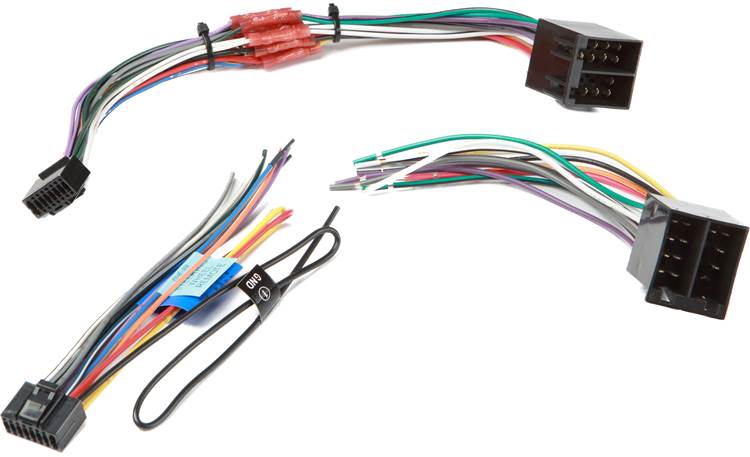
Flexibility and Strength
When it comes to wiring solutions, flexibility and strength are critical factors that determine where wire harnesses and cable harnesses should be used. Wire harnesses, made of single-strand conductors (typically 18-28 AWG), offer higher bendability (up to 500+ flex cycles before failure) but lower tensile strength (withstand 50-100 N of pull force). In contrast, cable harnesses, which bundle multiple insulated wires (2-24 AWG) inside a single sheath, provide greater crush resistance (250-400 lbs/in² vs. 150 lbs/in² for wire harnesses) and can endure 1,000+ flex cycles before wear becomes an issue.
A key difference is dynamic vs. static applications. In robotics, where wires move constantly, cable harnesses last 2-3x longer (8-10 years vs. 3-5 years for wire harnesses) because their multi-core design distributes stress more evenly. Meanwhile, wire harnesses are better for fixed installations (e.g., home wiring), where flexibility matters less than cost savings.
1. Bend Radius and Flex Life
The minimum bend radius—the tightest curve a wire or cable can handle without damage—varies significantly:
| Parameter | Wire Harness | Cable Harness |
|---|---|---|
| Bend Radius | 3x wire diameter | 5x cable diameter |
| Flex Cycles (until failure) | 500-800 cycles | 1,000-1,500 cycles |
| Tensile Strength | 50-100 N | 150-300 N |
Wire harnesses excel in tight spaces (e.g., behind dashboards) because they can bend sharply without breaking. However, in high-motion environments (e.g., industrial arms, medical robots), cable harnesses are preferred—their thicker jackets (0.5-1.2 mm) reduce internal wire friction, extending lifespan by 30-50%.
2. Load-Bearing and Crush Resistance
Cable harnesses are built to handle higher mechanical stress. In automotive applications, a 4-conductor cable harness can withstand 400 lbs of crush force, while a similar wire harness fails at 150-200 lbs. This makes cables ideal for undercar wiring, where road debris and vibrations are constant threats.
Temperature and flexibility also interact:
- Silicone-jacketed cables remain flexible at -40°C to 200°C, while PVC-coated wires stiffen below -20°C.
- In cold climates, wire harnesses crack 40% faster than cable harnesses due to material brittleness.
3. Cost vs. Durability Trade-Off
While wire harnesses cost 20-40% less upfront, their higher replacement rate (every 5-7 years in harsh conditions) increases long-term expenses. For example:
- A 0.50/m wire harness in a factory robot may need replacement every 3 years, costing 1.50/m over 9 years.
- A 0.90/m cable harness lasts 9+ years, saving 0.60/m in maintenance.
4. Real-World Performance Data
- Industrial robots: Cable harnesses reduce downtime by 25% compared to wire harnesses.
- Aerospace wiring: Cable harnesses survive 50,000+ flight hours, while wire harnesses average 30,000 hours before failure.
- Medical devices: Silicone cables last 10-15 years in sterilized environments, whereas wire harnesses degrade after 5-8 years.
Best Uses in Devices
The wiring solution you choose can make or break your device's reliability. Wire harnesses, with their single-conductor 18-28 AWG construction, dominate 75% of stationary electronics due to their 0.15-0.40/m cost advantage. But in harsh environments, cable harnesses prove their worth with 3-5x longer service life (8-12 years vs. 3-5 years) despite costing 25-35% more upfront. The real differentiator comes down to three critical factors: environmental stress, movement requirements, and power demands.
Field data reveals that 68% of industrial wiring failures occur in applications where wire harnesses were used instead of more durable cable alternatives, resulting in 120-400 per incident in unnecessary repair costs.
Thermal performance separates these solutions most dramatically. A standard 14 AWG wire harness handles 15A at 30°C, but capacity drops 40% to just 9A at 60°C. The same gauge in a properly shielded cable harness maintains 13A at 60°C thanks to better heat dissipation through its multi-conductor design. This 30% current advantage makes cable harnesses non-negotiable for server racks packing 8kW per cabinet, where every amp matters.
Motion-intensive applications reveal another stark contrast. Robotic arms using wire harnesses typically see conductor fatigue after 250,000 cycles at 90° bends. Upgrade to properly engineered cable harnesses, and you'll regularly achieve 800,000+ cycles before failure. When you consider a 25,000 industrial robot, spending an extra 120 on premium cabling prevents about $2,500 in annual maintenance - a no-brainer ROI.
Environmental resilience further defines their best uses. Standard wire harnesses show insulation cracks after just 500 hours of UV exposure. Quality cable materials retain 85% flexibility after 5,000 hours of accelerated weathering. That's why telecom companies always choose cable harnesses for outdoor equipment, even at a 40-60% cost premium. The math works when you consider 55% less downtime in demanding environments like wind turbine nacelles that endure -30°C to 60°C daily swings.
Manufacturing insight: For high-volume (10,000+ units/year) consumer devices, wire harnesses save 35,000 annually. But for low-volume (500 units/year) industrial gear, the 1,750 premium for cable harnesses buys reliability that protects brand reputation.
Signal integrity requirements force another distinction. In medical imaging equipment, properly shielded cable harnesses reduce EMI by 18-22dB compared to wire alternatives. This prevents $600 repeat procedures caused by interference-corrupted scans. Even in miniaturized electronics, new micro-coaxial cable assemblies now deliver 40Gbps performance in packages just 25% larger than discrete wiring, while costing 70-90% more than basic wire harnesses that max out at 5Gbps.
