Automotive Wire Harness Manufacturer: Request a Quote
If you’re already evaluating suppliers, you don’t need another “what is a wire harness” explainer.
You need two things:
-
A quote you can trust (based on complete requirements, not assumptions), and
-
Prove your supplier can hit quality, testing, and change-control expectations when the program moves from prototype to volume.
This guide is written for OEM procurement and engineering teams who want a clean, audit-ready path to pricing a custom automotive wire harness.
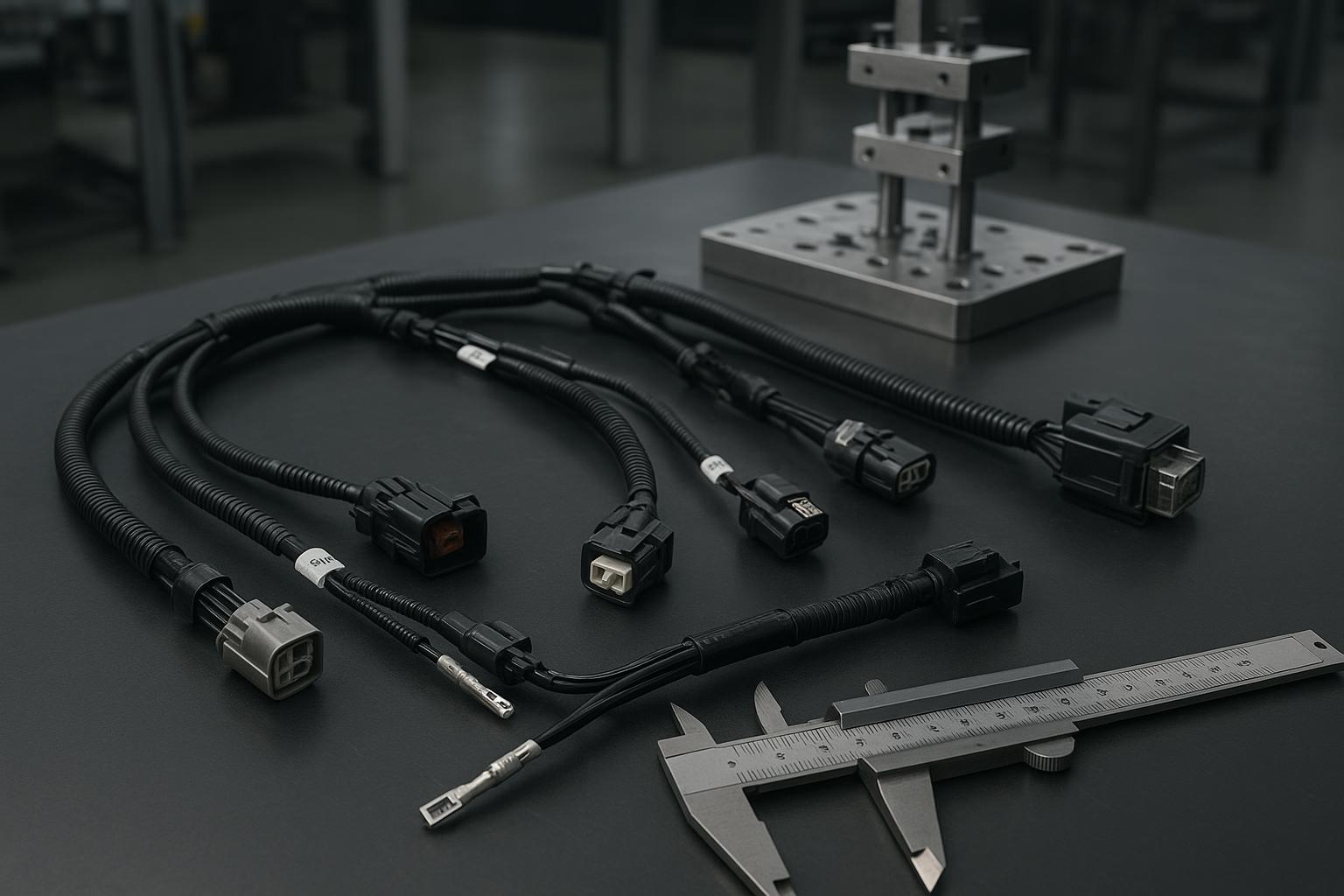
What to verify before you send an RFQ to any automotive wire harness manufacturer
A quote is only as good as the supplier’s ability to execute the same build—every time—under change.
Here’s what OEM teams typically validate when shortlisting an automotive wire harness manufacturer:
1) Quality system maturity (IATF 16949 scope, not just the badge)
IATF 16949 is widely used throughout the automotive supply chain because it layers automotive-specific controls onto ISO 9001. It’s designed to reduce variation and prevent defects—exactly what you care about when a harness becomes a recurring PO.
For background, see the IATF’s overview of IATF 16949:2016 and IATF oversight and AIAG’s IATF 16949 standard overview.
What to ask in practice:
-
What’s the certification scope (site + processes) that will build your harness?
-
How do they manage internal audits and corrective actions?
-
Can they support your documentation expectations (traceability, inspection records, revision history)?
2) Workmanship standard and inspection discipline
Even strong drawings can’t compensate for inconsistent terminations.
Ask how workmanship is controlled (training, inspection criteria, destructive vs. non-destructive checks) and whether the supplier aligns with IPC/WHMA-A-620 expectations for harness workmanship.
3) Testing and validation: what is tested, when, and at what coverage
For a custom automotive wire harness, “tested” can mean anything from spot checks to 100% electrical verification.
Ask for the test plan in plain terms:
-
Continuity: 100% or sampling?
-
Insulation/withstand-voltage testing: required or optional based on your spec?
-
Crimp verification: pull-force testing, cross-section analysis, and how often those are performed
If you want a first-party example of how one supplier describes assembly and test steps, Hooha has an overview of automotive wire harness assembly and testing.
4) Change control that won’t break your program
Most supplier pain doesn’t come from the first build.
It comes from:
-
a connector substitution,
-
an ECO that changes a pinout,
-
a revision mismatch between engineering and the shop floor.
Ask:
-
How do they control revisions and ensure the current build spec is on the line?
-
How fast can they respond to ECOs with updated documentation and samples?
What to include in your wire harness RFQ (so your quote is accurate)
A slow quote is frustrating. A fast-but-wrong quote is worse.
To get a quote that holds up after engineering review, include these items in your RFQ package.
The RFQ checklist (copy/paste)
-
2D drawing (PDF) and any formboard/layout requirements
-
BOM with:
-
connector and terminal part numbers
-
wire type (e.g., TXL/GXL or equivalent), AWG / cross-section
-
seals, boots, backshells, grommets, clips/ties
-
sleeve/loom/tape/heat-shrink specs
-
-
Pinout/wiring diagram and any labeling requirements
-
Lengths and tolerances (and how length is measured)
-
Operating environment
-
temperature range, vibration expectations
-
fluids/oils exposure
-
ingress protection targets (if applicable)
-
-
Testing requirements
-
continuity coverage
-
insulation/withstand-voltage requirements (if applicable)
-
pull-force requirements (if specified)
-
-
Quality documentation requirements
-
traceability expectations
-
inspection record requirements
-
sample/FAI expectations
-
-
Volumes
-
prototype quantity
-
pilot quantity
-
annual volume forecast
-
-
Target dates
-
quote needed by
-
sample needed by
-
SOP target
-
Pro Tip: Add a one-page “acceptance test matrix” to your RFQ: each test item, method, coverage (100% vs sampling), and pass/fail criteria. It prevents misalignment later.
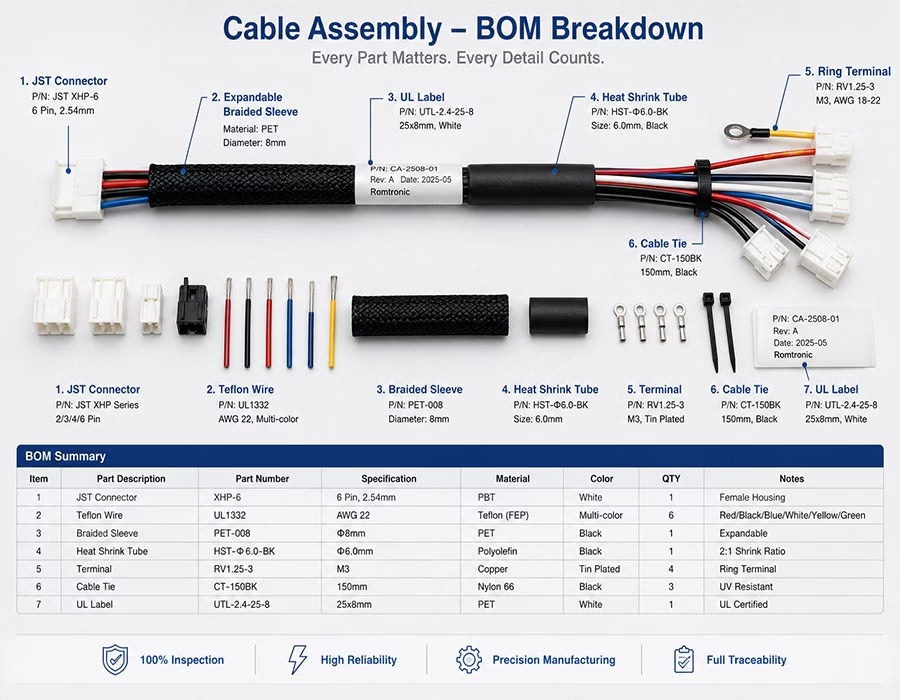
Treat the quote as a risk conversation (how to evaluate the response)
When you receive the quote, don’t only review the price.
Review whether the supplier understood the risk.
Must-haves in a quote response
-
Clear assumptions (materials, alternates, testing coverage, packaging)
-
Clear NRE/tooling assumptions (if any)
-
Lead time assumptions (prototype vs volume)
-
What happens when a component is constrained (approved alternates workflow)
Red flags
-
Vague testing language (“fully tested”) with no method or coverage
-
No mention of revision control or change management
-
Overconfident promises with no documented plan
Request a quote from Hooha Harness (what to send)
If you want pricing for a custom automotive wire harness, the fastest path is to send a complete RFQ package (drawing + BOM + pinout + volumes + test plan).
Many teams use “request a quote wire harness” pages as a starting point—but the quality of your input package is what drives quote accuracy.
What to send
-
Drawing + revision
-
BOM with connector/terminal part numbers (and approved alternates, if you have them)
-
Quantity (prototype + forecast)
-
Required standards/workmanship expectations
-
Test requirements (method + coverage)
-
Target dates (quote, sample, SOP)
What happens after you submit (recommended internal workflow)
To keep the process tight on both sides, ask for:
-
confirmation of assumptions before pricing
-
a short list of open engineering questions (if any)
-
a proposed sample/approval timeline
Next step: Request a free quote
Submit your project details here: Hooha Harness — request a free quote
You can also email your RFQ package to sales@hoohawirecable.com (listed on the same page).
FAQ: Requesting a quote for wire harness assembly
How do I get the fastest, most accurate quote?
Send a complete RFQ package (drawing, BOM with part numbers, pinout, volumes, environment, and test requirements). Incomplete RFQs force suppliers to guess—and you’ll pay for those guesses later.
What should I ask about testing?
Ask which tests are performed, at what coverage (100% vs sampling), and what the pass/fail criteria are. If you have an acceptance test matrix, include it.
What does “IATF 16949 wire harness supplier” actually mean?
It should mean the supplier’s automotive quality management system is certified to IATF 16949 for the site and the processes that build your product—not just a generic claim. Confirm scope, audit approach, and how change control and traceability are handled.
