Introduction
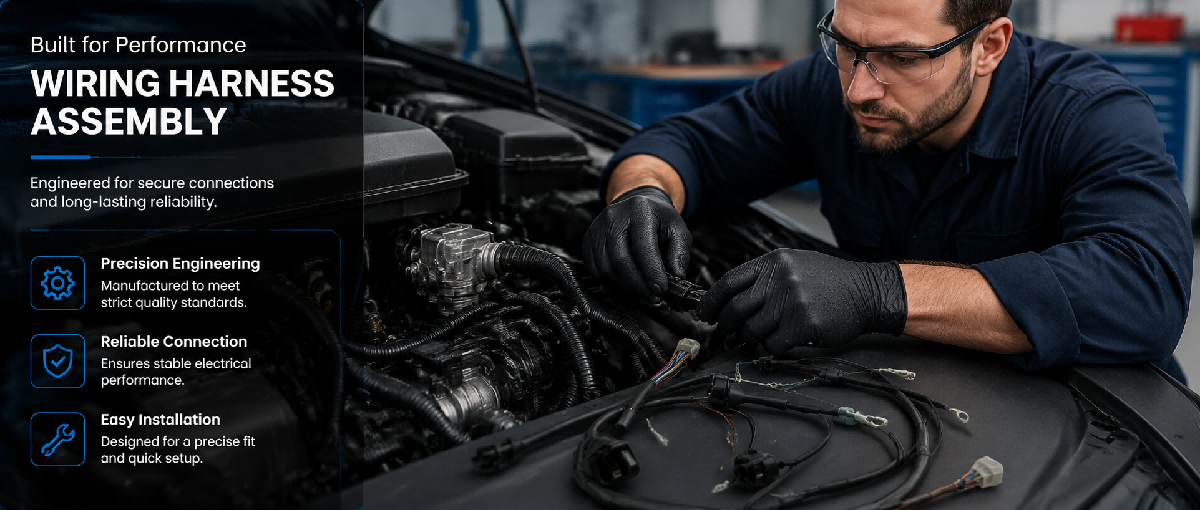
We are a professional manufacturer of custom starter alternator wiring harnesses in China. A starter alternator wiring harness is a critical electromechanical assembly that connects the starter motor, alternator, and the vehicle's power distribution network. It serves as the primary conduit for high‑current flow during engine cranking and for charging current returning from the alternator to the battery and electrical loads. Typically constructed from heavy‑gauge conductors, robust connectors, and multi‑layer protective sheathing, the harness must withstand extreme under‑hood conditions, including temperatures up to 200 °C, continuous vibration, exposure to oil, fuel, and road splash. Its design integrates precise terminal crimps, strain relief, and secure routing to prevent chafing or short circuits. In modern vehicles, the harness may also incorporate shielded twisted pairs for voltage-sense and field-control signals, ensuring stable alternator regulation. Proper harness performance is essential for reliable starting, optimal battery life, and overall electrical system integrity.
Types
Starter alternator wiring harnesses are categorized by application and configuration to meet diverse operational demands.
By Vehicle Application
• Passenger Cars/Light Trucks: Compact, cost‑optimized designs for standard 12 V systems.
• Commercial Vehicles: Heavy‑duty harnesses rated for high current (300 A+) and extended service life.
• Off‑Highway/Industrial: Reinforced for extreme vibration, dust, and moisture (IP6K9K).
By Configuration
• Single‑Wire Harness: Simple connection between battery, starter, and alternator.
• Integrated Harness: Adds sensor leads (e.g., crank position) or grounding straps.
• High‑Voltage Hybrid: Utilizes thicker insulation and HV connectors for 48 V–800 V systems.
Applications
The harness performs three core functions: power transmission, charging circuit completion, and signal integrity. At startup, it delivers instantaneous current bursts (often 200–600 A) from the battery to the starter solenoid, requiring low‑resistance paths to minimize voltage drop. When the engine runs, the alternator generates AC, which is rectified and regulated; the harness carries this DC current back to the battery and vehicle loads. Additionally, it transmits voltage-sense and field-excitation signals to the alternator regulator, enabling precise output control. Applications span automotive, commercial trucking, agriculture, construction, marine, and stationary generator sets. Failure of the harness can cause no‑start conditions, under‑charging, or electrical fires, making its reliability paramount for safety and operational uptime.
Material Selection
Connector
Connectors must endure high temperature, vibration, and environmental ingress while maintaining low contact resistance.
| Brand |
Series |
Key Features |
Typical Use |
| TE Connectivity |
AMP Superseal 1.5/2.8 |
IP67, 125 °C, secondary lock |
Waterproof alternator connections |
| TE Connectivity |
DEUTSCH DT/DTM |
Rugged, IP68, high vibration |
Heavy‑duty trucks, off‑road |
| Amphenol |
AT Series |
Sealed, corrosion‑resistant |
Industrial engines |
| Molex |
MX150 |
Cost‑effective, sealed |
Passenger vehicles |
Selection prioritizes gold‑plated contacts for signal stability and thermoplastic housings rated ≥150 °C.
Wire & Cable
Conductors must handle high current and resist thermal degradation.
| Standard |
Type |
Temperature Rating |
Oil Resistance |
Typical Application |
| SAE J1128 |
GXL |
125 °C |
Good |
Under‑hood automotive |
| SAE J1128 |
TXL |
125 °C |
Excellent |
High‑temperature zones |
| ISO 6722 |
FLRY‑B |
105 °C |
Very Good |
European vehicles |
| JASO D 611 |
AVS |
80 °C |
Moderate |
Japanese compact cars |
Cross‑linked polyethylene (XLPE) insulation is preferred for its superior heat and chemical resistance.
Auxiliary Materials
Protective components shield the harness from mechanical and environmental damage.
| Material |
Property |
Benefit |
| Nylon 6 Corrugated Conduit |
200 °C rating, flexible |
Abrasion and crush protection |
| PET Braided Sleeving |
Lightweight, expandable |
Bundling and minor abrasion |
| Fiberglass/Basalt Sleeving |
500 °C+ resistance |
Proximity to exhaust manifolds |
| Fleece Tape |
Vibration damping |
Reduces noise and movement |
Manufacturing Process & Assembly
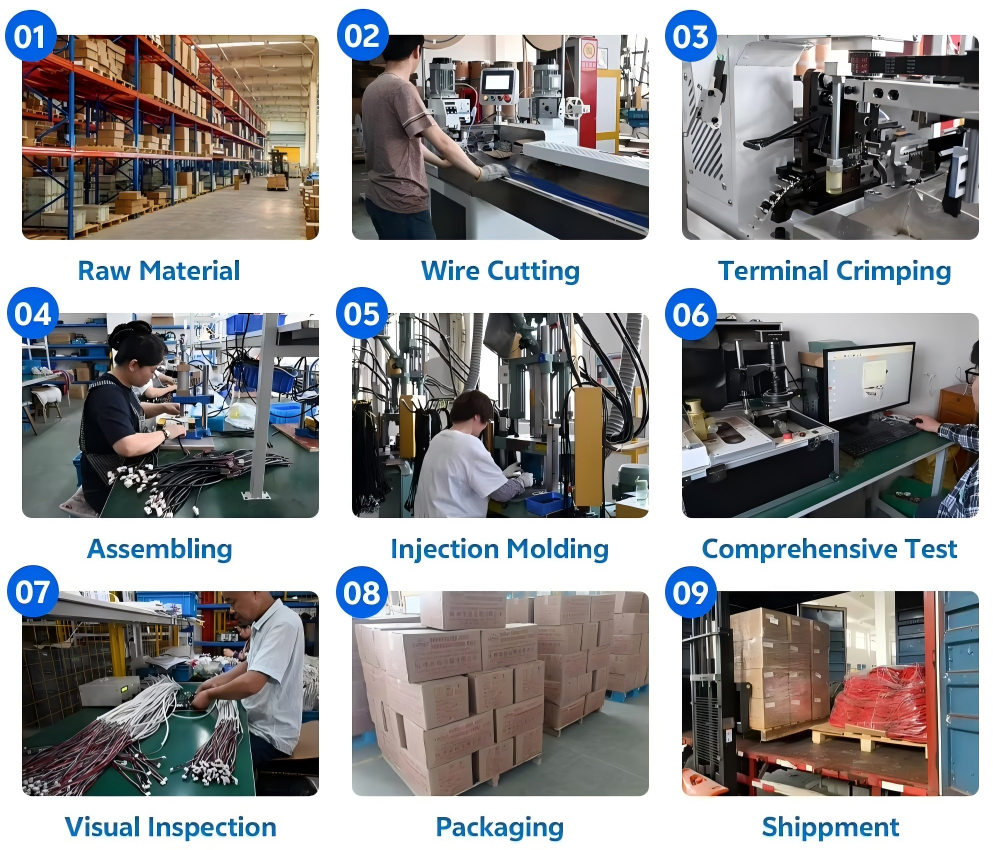
General Process Flow
Quality Assurance
Each harness is built on custom fixtures that replicate the vehicle routing path, ensuring correct bend radii and slack. During assembly, operators verify critical dimensions against the master drawing. After assembly, every harness undergoes 100 % continuity test using automated testers to confirm all circuits are correctly wired and free of opens/shorts. This guarantees zero functional defects before shipment.
Custom Starter Alternator Harness Case
Starter Harness
Starter Cable
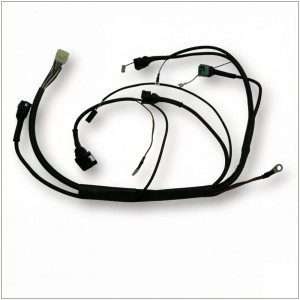
Starter Alternator Wiring Harness
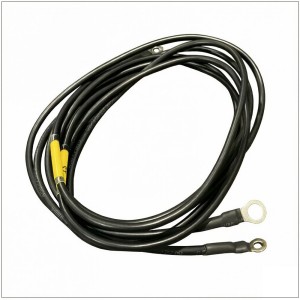
Starter Alternator Leads Wire
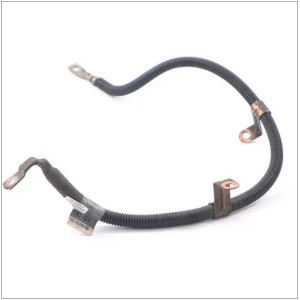
Battery Cable
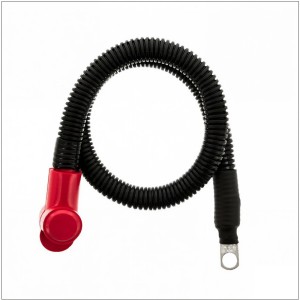
Alternator Power Cable
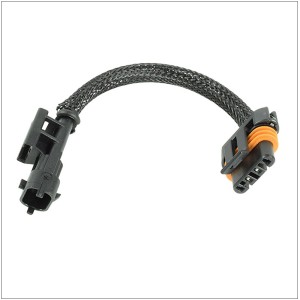
Alternator Wiring Harnesses
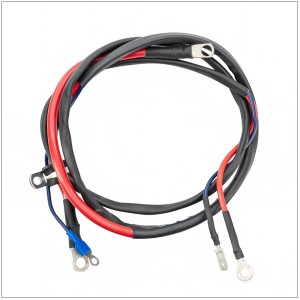
Alternator Wiring Harness
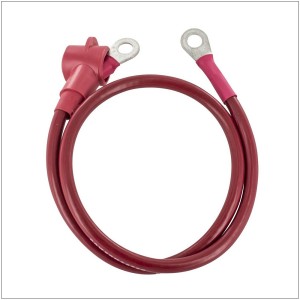
Alternator Wire Harness
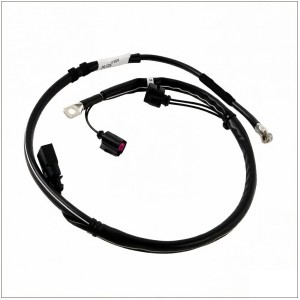
Alternator Harnesses
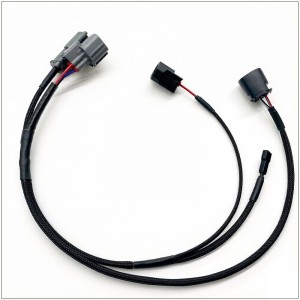
Alternator Harness
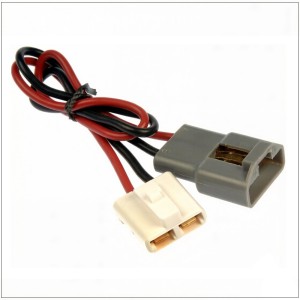
Alternator Connector
We Support Custom Wire Harness Assembly
- Connectors: Support TE, Deutsch, Aptiv, Amphenol, Sumitomo, Yazaki, etc.
- Wire Gauge:
- depends on your needs
- Recommended by us
- Wire Colors: Available in a wide range, including white, black, red, yellow, blue, green, brown, orange, purple, grey, and more.
- Wire Length: Fully customizable to your specifications.
- Wiring Diagram: Tailor-made to meet your project needs.
- Custom type:
- Send drawing to customize.
- Send a sample to customize.
- Tell us as many details as possible to customize.
- Minimum Order: 100 pieces.
Customize Your Wire Harness
Send your sample or drawing/schematic for quote price→ Feedback with quotation(1~3 days) → Confirm quotation → Arrange sample you for approval→ [Make mold if needed (7 days) →Mold test] → Making samples(1~3 days)→ Samples test(Approval) → place order for Mass production(2~3 weeks)→ Quality checking→ Packing → Delivery → After Service → Repeat Order.