TECHNOLOGY Support
-
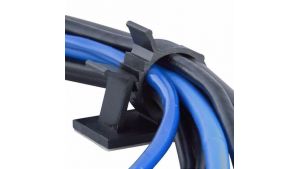
5 Ways Cable Clips Improve Wire Management
Cable clips organize wires efficiently, reducing clutter by securing cables every 6-12 inches. They prevent tangling (saving 30% setup time), protect against damage (50% fewer wire replacements), and enable vertical/horizontal routing. Use ......
-
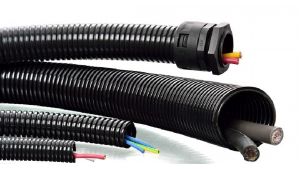
What are Standard Wire and Conduit Sizes
Standard wire sizes follow the American Wire Gauge (AWG) system, ranging from 40 AWG (0.08mm) to 0000 AWG (11.7mm). Common conduit sizes (EMT type) include 1/2" (16mm), 3/4" (21mm), and 1" (27mm) diameters, with larger industria......
-

How Does Twisted Pair Cable Work | 5 Key Facts
Twisted pair cables reduce electromagnetic interference by twisting copper wires (typically 2-4 pairs), enabling data speeds up to 10 Gbps (Cat 6a) over 100 meters. The tighter twists (e.g., 3-5 twists/inch in Cat 5e) enhance signal integri......
-
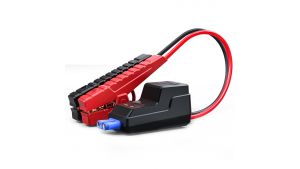
How to Start a Car with a Jumper Cable
To jump-start a car, first park the donor vehicle close (but not touching) and turn both engines off. Connect red (+) clamps to each battery’s positive terminal, then attach the black (-) clamp to the donor’s negative te......
-
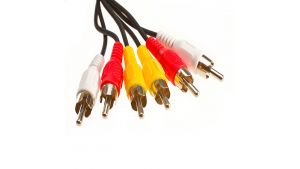
5 Common Issues With RCA Cables
Poor RCA cable connections often cause static (30% of issues) due to loose plugs; fix by twisting connectors clockwise for tighter grip. Shielded cables reduce 60% of interference; avoid running near power cords. Oxidation accounts for 20% ......
-
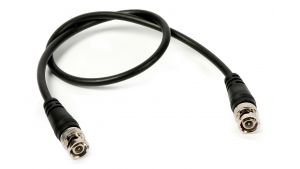
RF cables are crucial for 5G networks (up to 40 GHz), satellite communications (low-loss LMR-400), medical imaging (50Ω impedance), military radar (shielding 90dB+), and broadcast systems (RG-6 for 4K video), ensuring minimal signal l......
-
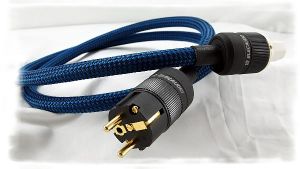
How to Choose the Best Amplifier Power Cable
To select the best amplifier power cable, prioritize oxygen-free copper (OFC) wires with 99.95% purity for minimal resistance (<0.03Ω/m). Choose 8-4 AWG thickness for 500-2000W systems, ensuring 105°C heat-rated i......
-
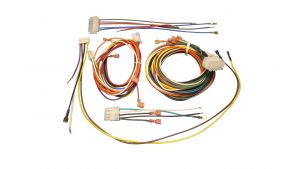
What Are the Best Tips for Cable Harness Assembly
For optimal cable harness assembly, use color-coded wires (per ANSI/TIA-606 standards) and crimp terminals with 95% compression accuracy to ensure reliability. Implement a pull test (≥15 lbs force) for connector security and ......
-
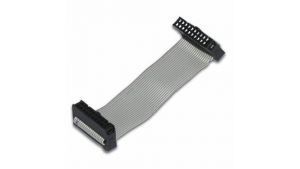
What Are the 5 Key Uses of Flexible Flat Cables
Flexible flat cables (FFCs) are widely used in electronics for high-speed data transfer (up to 10 Gbps), compact device connections (0.5mm pitch), LCD screens (reducing space by 60%), printers (enabling 0.3mm bends), and drones (saving 40% ......
-
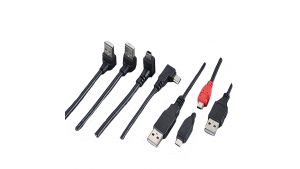
USB 2.0 vs 3.0 Cable Differences | 3 differences
USB 3.0 cables have 9 wires (vs. USB 2.0's 4), enabling 5Gbps speeds (10x faster) and 900mA power output (vs. 500mA). They feature additional shielding (foil + braid) to prevent interference, identifiable by blue connector......
-
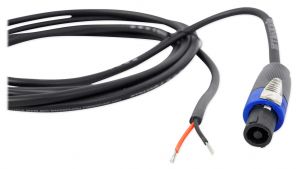
What Should I Consider When Buying Speaker Cables?
When buying speaker cables, consider gauge (12AWG for long runs >50ft, 16AWG for short), oxygen-free copper (OFC) for minimal resistance (<5% signal loss), and shielded jackets to reduce interference. For high-power sy......
-
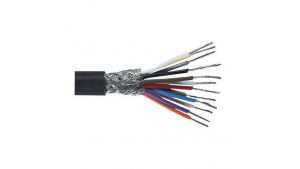
Shielded wire blocks EMI/RFI interference using conductive layers (foil/braid) with 85-100dB noise reduction. The shield must be properly grounded (≤1Ω resistance) to divert interference, while maintaining 360° coverage. Ideal ......
-
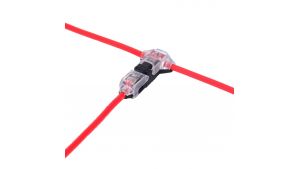
To splice cables properly, first strip 1/2 inch of insulation using wire strippers. Twist matching gauge wires (e.g., 16AWG to 16AWG) together clockwise. Secure with heat-shrink tubing or solder (60/40 rosin-core) for du......
-
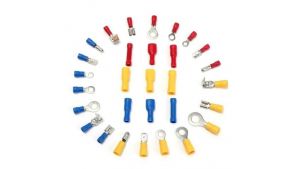
Cable Lug Types and Size Chart
What is the cable lug? Cable lugs are vital components utilized in electrical systems to establish connections between cables and devices or equipment. They are available in a variety of materials, such as copper, tinned coppe......
-
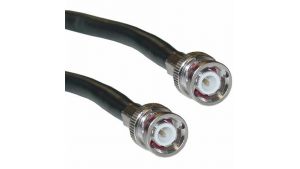
What Are 3 Key Uses of Coaxial Cable
Coaxial cables deliver 4K/HDTV signals (1-3GHz bandwidth), transmit 10Gbps internet via DOCSIS 3.1, and connect RF antennas (50-75Ω impedance). Their dual-shielded design ensures <1dB/m signal loss, outperforming un......
